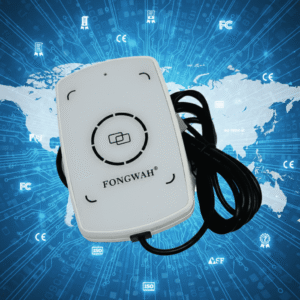
You built an incredibly powerful logistics software platform that solves huge problems. But when you deploy it, you hand your client a generic, ugly reader with someone else's logo on it.
Sourcing custom hardware through an OEM/ODM partnership allows you to create White Label RFID Hardware that perfectly matches your system's needs. By customizing the enclosure and specifications, you not only protect your intellectual property but also offer a complete, cohesive product line to your customers.
Many software companies think hardware design is too difficult or expensive, but finding the right manufacturing partner makes the process simple and profitable.
Does Your Hardware Match the Quality of Your Software?
Your code is proprietary and high-value. Putting it inside a standard, off-the-shelf plastic box makes your expensive solution look cheap to the end-user.
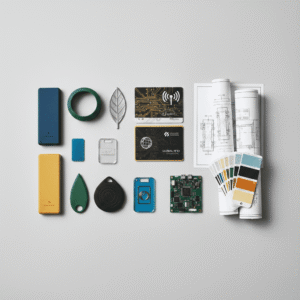
We offer complete customization, from the Custom RFID Reader Enclosure to specific PCB Design. Whether you need specific ports like PoE or RS232, or distinct Frequency Customization (FCC/ETSI) for different regions, we build the device to fit your exact roadmap.
I talk to SaaS founders and System Integrators sometimes. They often share the same frustration. They have spent years building a perfect WMS (Warehouse Management System). But when they go to sell it, they have to buy a reader from a competitor or a generic brand. This weakens their brand authority.
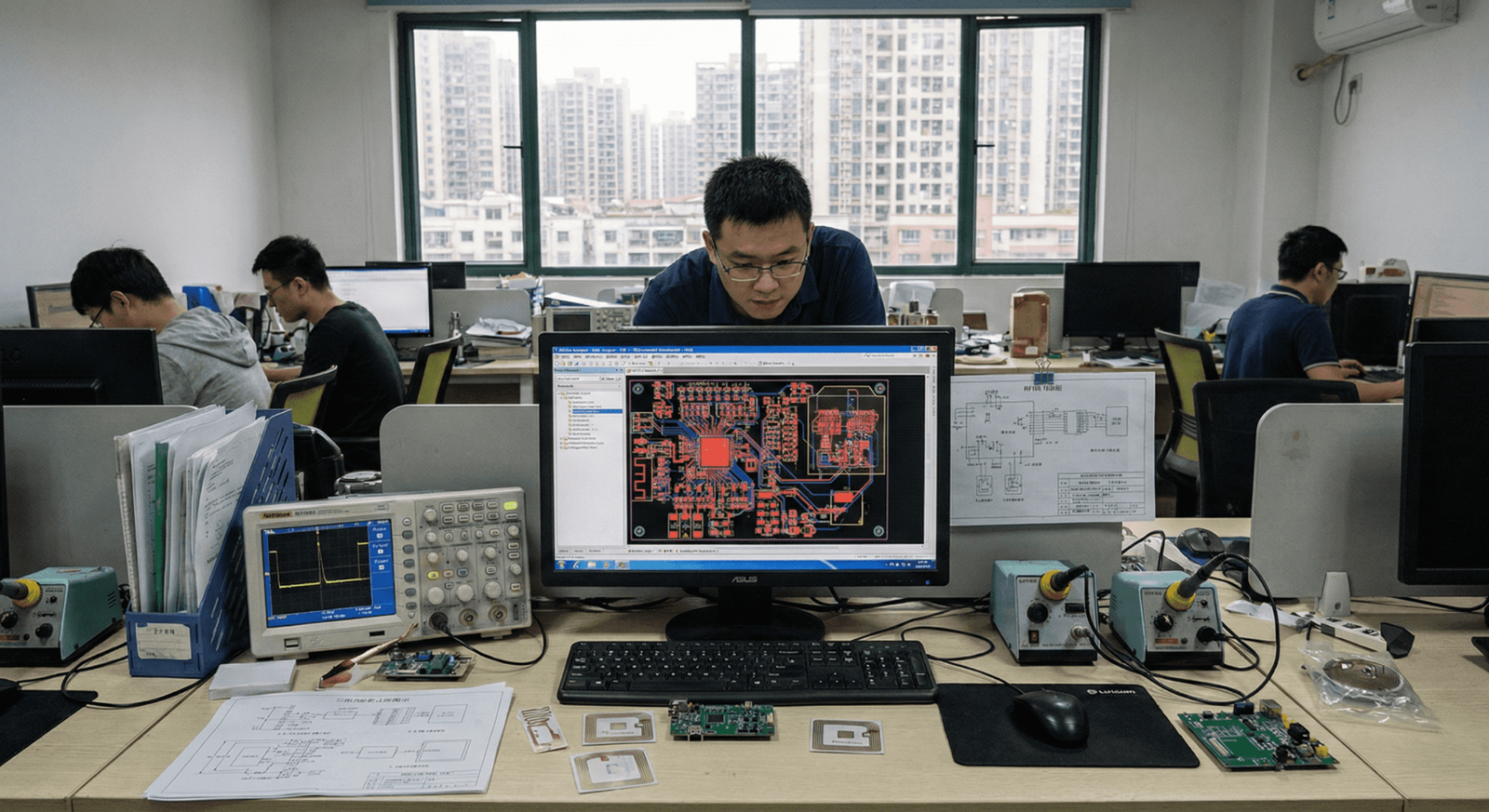
This is where "Private Label" value comes in. When we engage in an ODM (Original Design Manufacturer) project, we start with the PCB Design. Maybe you do not need the standard USB port. Maybe your clients mainly use industrial PLC controllers, so you need a direct RS232 or RS485 interface. We can change the board layout to fit this.
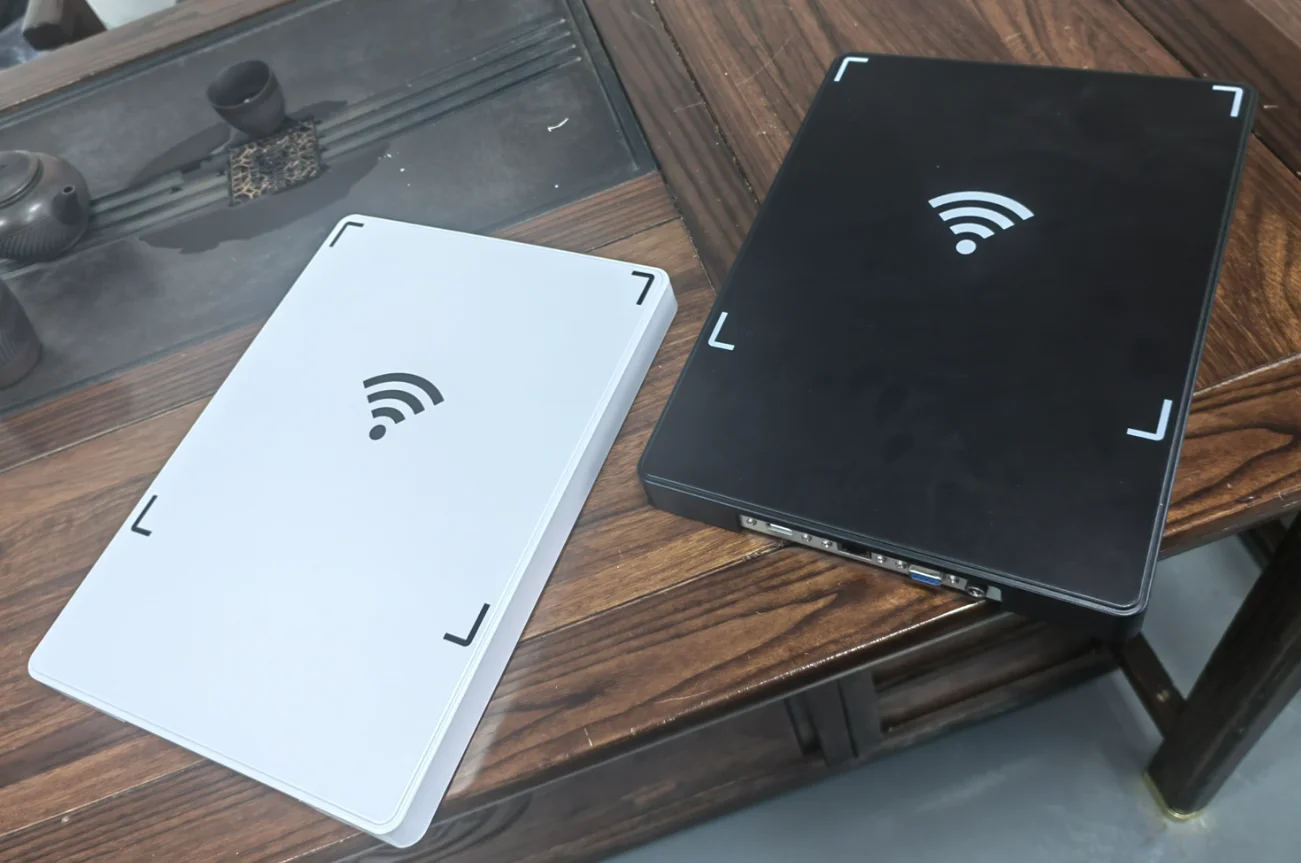
We also look at the Custom RFID Reader Enclosure. Appearance matters. If your software branding is blue and sleek, we can mold the casing to match. We can laser-etch your logo directly onto the device. This transforms the product from a "commodity" into a proprietary asset. Your customer sees your system, from the screen to the sensor.
Furthermore, we handle the radio compliance. If you sell in Europe, we tune the antenna for Frequency Customization (FCC/ETSI)] 865-868MHz. If you sell in the US, we tune it to 902-928MHz. This ensures you are legally compliant without needing your own RF engineering team.
| Feature | Off-the-Shelf Reader | Custom OEM/ODM Reader |
|---|---|---|
| Branding | Manufacturer Logo | Your Description/Logo |
| Ports/Interface | Standard (Fixed) | Customized (RJ45, PoE, WiFi) |
| Frequency | Region Locked | Tunable/Selectable |
| Enclosure | Standard Mold | Custom Color/Shape |
Why Should You Source Direct from a Chinese Manufacturer?
Buying from local distributors eats your profit margin significantly. You pay for their storage, their sales team, and their shipping, leaving you with very little room to scale.
Working Direct from China Manufacturer eliminates the middleman. You gain faster response times, more flexible Minimum Order Quantities (MOQ), and a direct line to the engineers who actually build your product, ensuring problems are solved in hours, not weeks.

Living and working in Shenzhen, the hardware capital of the world, I see the speed of supply chains firsthand. Many of the "big brands" you see in the West contract factories right down the street from our facility. When you buy from a local distributor in your country, the price has been marked up at least two or three times.
By sourcing directly from us, you remove those layers. But price is not the only advantage. The real advantage is speed and communication. When you work with a distributor, technical questions go through a game of "telephone." You ask the sales rep, they ask the manager, the manager emails the factory. It takes days.
When you partner directly with a manufacturer like Fongwah, you speak to the team that writes the firmware. If you need a change in the SDK because your software uses C# or Java in a specific way, we can update the White Label RFID Hardware logic immediately.
We also understand that you might not want to order 5,000 units on day one. Distributors demand high volumes. We offer a more flexible MOQ. We want to grow with you. We can start with a pilot batch for your first major client deployment.
| Factor | Local Distributor | Direct Manufacturer (Fongwah) |
|---|---|---|
| Cost | High (Multiple markups) | Low (Factory Price) |
| Communication | Slow (Third Party) | Fast (Direct Engineering) |
| Flexibility | Low (Fixed Catalog) | High (Custom Specs) |
| Speed to Market | Dependent on Stock | Made to Order |
What Does a Successful Hardware Partnership Look Like?
Most people fear that custom manufacturing is a chaotic black box. They worry about receiving a container of broken electronics that they cannot return or fix.
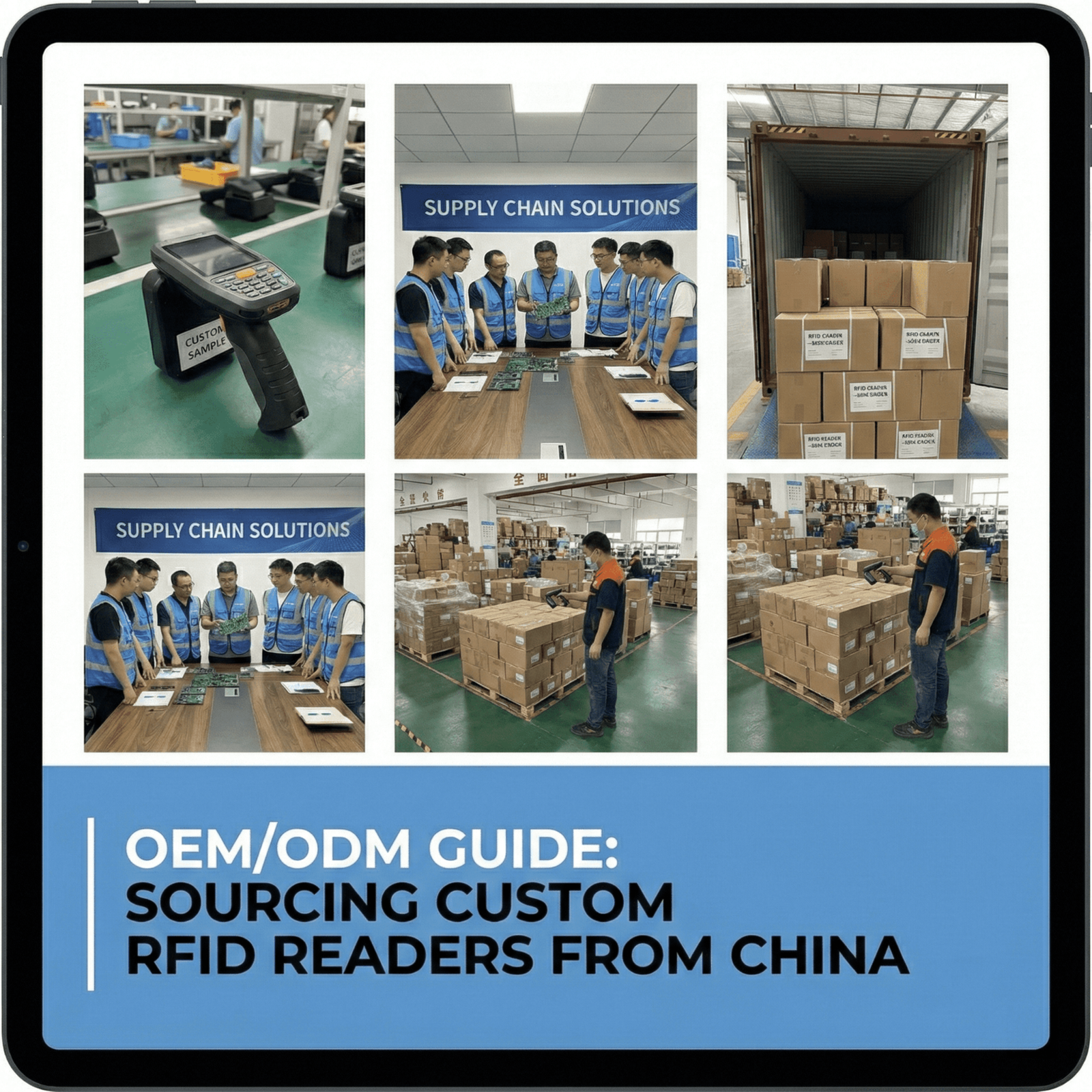
A professional OEM process follows a strict timeline: Requirement Analysis ensures we understand your specs, Prototyping validates the design, Mass Production scales the assembly, and Global Shipping delivers the final product directly to your warehouse.

We have standardized our workflow to remove the risk for our B2B partners. It is not a guessing game; it is engineering.
Step 1: Requirement Analysis. We sit down (virtually) and discuss your application. Are you putting the reader in a freezer? We need cold-resistant components. Are you putting it on a metal truck? We need a specific antenna. We define the "Scope of Work."
Step 2: Prototyping. We do not just build 1,000 units. We build a "Golden Sample." We send this to your office. Your software team installs your APK or connects your API. You test it in the real world. You give us feedback. Maybe the cable is too short. Maybe the LED is too bright. We adjust.We don't just send you a reader; we provide a full SDK integration kit with source code examples in C# and Java. Your developers can verify the hardware compatibility in less than 2 hours.
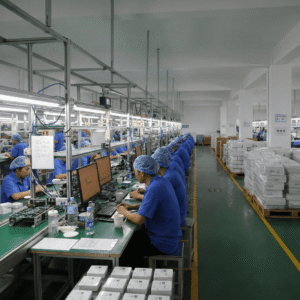
Step 3: Mass Production. Once you sign off on the sample, we start the machines. We have strict Quality Control (QC). Every reader goes through an "aging test," running for 24-48 hours to ensure it won't fail.
**Step 4: Global Transportation. We will be responsible for contacting and confirming all logistics arrangements. Whether you prioritize speed with air freight or cost-effectiveness with sea freight, we will ensure that your goods clear customs smoothly and are delivered to you.
| Stage | Activity | Goal |
|---|---|---|
| 1. Analysis | Review specs & environment | Define technical needs |
| 2. Prototyping | Build sample unit | Test software integration |
| 3. Production | Manufacturing & QC | Scale volume |
| 4. Logistics | Packaging & Shipping | Safe delivery |
Frequently Asked Questions
Q: What exact features can be customized on a white-label RFID reader?
A: As an OEM manufacturer, we offer end-to-end customization. You can customize the external enclosure (color, shape, and laser-etched logo), specific interface ports (like PoE, RS232, or RS485), PCB board layout, and frequency tuning (FCC for the US, ETSI for Europe) to ensure perfect integration with your proprietary software.
Q: Why should my software company source directly from a China manufacturer instead of a local distributor?
A: Sourcing directly from our factory in Shenzhen eliminates middleman markups, significantly increasing your profit margins. More importantly, it gives you a direct line of communication with our firmware engineers for rapid SDK updates, and we offer highly flexible MOQs (Minimum Order Quantities) for your initial pilot projects.
Q: How difficult is it to integrate your custom RFID prototype with our existing logistics software?
A: It is incredibly straightforward. During the Prototyping phase, we send you a "Golden Sample" along with a complete SDK integration kit. Because we provide clear documentation and source code examples in C#, Java, and Python, your developers can usually verify hardware-software compatibility in less than 2 hours.
Conclusion
To dominate your market, you need hardware that carries your brand and fits your budget, which is why partnering with a direct manufacturer for custom RFID readers is the smart strategic move.
Contact our engineering team for a confidential discussion about your proprietary hardware needs.
---