
Sourcing random blank cards off Amazon to test your enterprise access software is a rookie mistake. I've watched system integrators lose major corporate contracts because their generic cards suffered a 20% failure rate against mismatched third-party readers.
Sourcing custom printed RFID cards and an OEM RFID reader from a single hardware supplier guarantees antenna resonance and firmware compatibility. By utilizing a unified program RFID cards SDK, developers can instantly encode secure memory sectors, eliminating hardware debugging and accelerating global software deployment.

Let’s look at the actual physics and software mechanics of building a scalable, proprietary identity system.
What Actually Makes Programmable RFID Cards Enterprise-Ready?
Integrators assume all blank cards are identical. They aren't. Buying cheap generic chips means you get unstable EEPROM, weak encryption capabilities, and a nightmare when trying to write custom applets.
True programmable RFID cards feature partitioned memory blocks protected by cryptographic keys. To program RFID cards securely, you must write custom data directly into these protected sectors—not just read the public UID—which requires a hardware-level SDK designed specifically for the ISO 14443A standard.

William, I spent years on the assembly line testing chip yields. The difference between a consumer-grade blank card and an enterprise programmable credential is the memory architecture.
When you are building a proprietary payment or access control system, reading the public UID is a massive security vulnerability. You need to write your own proprietary encrypted payload into the card's memory sectors.
The Secure HF Issuance Station
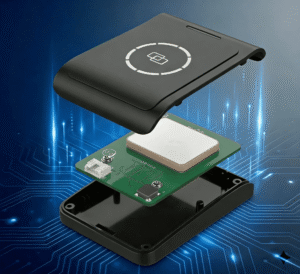
To do this without wasting weeks of development time, you need a dedicated issuing station. This is where the Fongwah S9-CU-00-00 comes in. It operates strictly at 13.56MHz and supports Contactless credentials (ISO 14443A/B, ISO 15693) over a standard USB interface.
Because we provide a robust native SDK (Read/Write) with this unit, your C# or Java application can seamlessly authenticate with the card's cryptographic keys and inject your custom data payload. You aren't fighting generic Windows drivers; you are commanding the hardware directly via our API to lock down the data sectors.
| Feature | Generic Keyboard Reader + Blank Card | Fongwah S9-CU-00-00 + SDK |
|---|---|---|
| Data Access | Public UID Only (Read-Only) | Full Sector Read/Write Control |
| Security Level | Zero (Easily cloned) | Enterprise-Grade (Encrypted payload) |
| Software Integration | Relies on OS text fields | Native C# / Java API Control |
| Primary Use Case | Low-security visitor logs | Proprietary Software Authorization |
Why Does Mixing Your RFID Hardware Supplier and Card Vendor Destroy ROI?
Buying custom printed RFID cards from a print shop and generic readers from a distributor creates an instant bottleneck. When antennas misalign, your read range drops by 50%.
Partnering with a single RFID hardware supplier ensures precise frequency tuning between the card's inlay and the reader's antenna. This closed-loop sourcing eliminates the frustrating RF troubleshooting phase, guaranteeing maximum throughput and consistent read rates for your end-user software deployments.

Let’s talk about RF physics. If you buy a batch of custom printed UHF tags from one vendor and a reader from another, you are rolling the dice on antenna resonance. The center frequency of the tag might be slightly off from the reader’s output, resulting in dropped reads at the physical layer. Your software team will waste weeks thinking it's a code issue when it's actually a hardware mismatch.
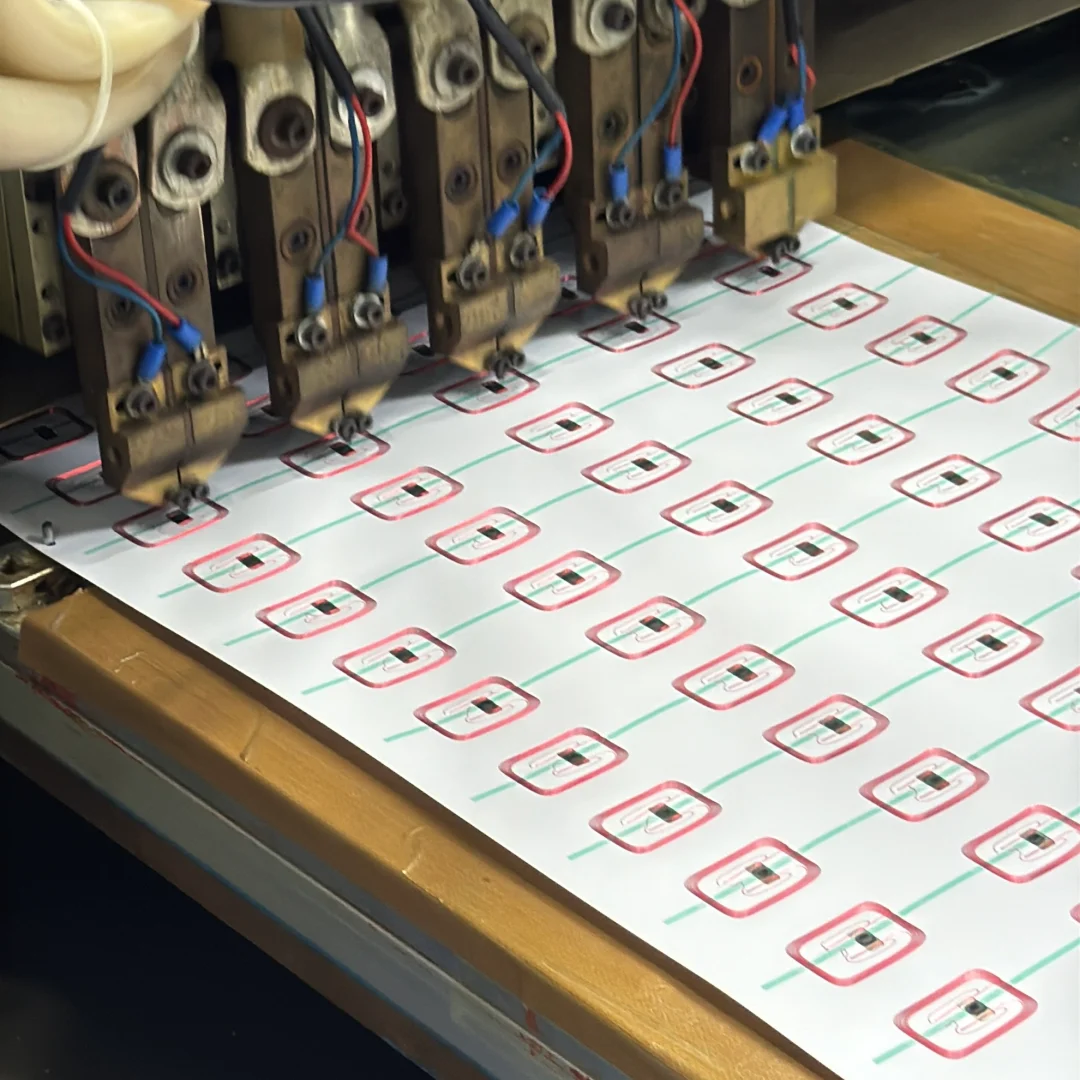
As a true 20-year factory, we manufacture both the custom printed RFID cards and the OEM RFID readers. We tune them together on our bench before shipping.
High-Speed UHF Initialization
If your deployment requires long-range tracking, you aren't using 13.56MHz; you're using UHF (860-960MHz). For bulk-encoding custom printed UHF cards, you need serious throughput. The Fongwah U6-CU-91 Desktop Reader processes 100 reads/sec. It uses a highly focused 3dBi ceramic antenna that provides a tightly controlled 0-100cm range.
You combine this high-speed hardware1 with our native SDK, and your software can rapidly initialize hundreds of proprietary cards per minute without misreads. That is how you scale a global rollout without burning integration hours.
| Sourcing Strategy | RF Tuning Accuracy | Troubleshooting Burden | Throughput Efficiency |
|---|---|---|---|
| Multi-Vendor (Cards + COTS Reader) | Inconsistent (Mismatched impedance) | High (Blame game between vendors) | Slow / Prone to drops |
| Single-Source (Fongwah OEM) | Precision Matched at Factory | Zero Hardware Debugging | 100 reads/sec (U6-CU-91) |
Can You Scale Global Deployments with True OEM Customization?
Your enterprise clients don't want a generic box with another company's logo. They want a cohesive, branded ecosystem that looks like an integral part of your expensive software suite.
True OEM customization goes beyond silk-screening logos onto custom printed RFID cards. By integrating bare-metal OEM RFID reader modules directly into your proprietary hardware enclosures, you control the entire physical and digital footprint, maximizing your profit margins on the total system sale.
William, when you sell a million-dollar ticketing or access system, the hardware needs to reflect that value. Sourcing off-the-shelf plastic readers screams "amateur."
You need to white-label the entire hardware stack. We don't just supply custom printed RFID cards with your client's high-resolution graphics; we supply the core reading engines that power your custom kiosks, turnstiles, and edge devices.
Embedded Module Integration
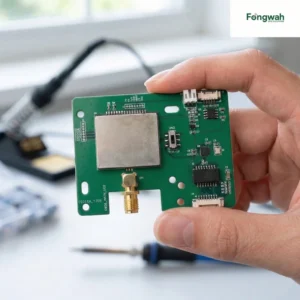
Stop trying to bolt desktop readers to the inside of a metal turnstile. Instead, you drop the Fongwah U1-CT-01 UHF Module straight onto your own PCB layout.
- The Footprint: It’s an ultra-compact 30x30mm board featuring 1 integrated ceramic antenna. You don't need external cabling.
- The Output: It pushes 0-20dBm power, delivering a reliable 50cm range that perfectly covers the user interaction zone without bleeding into adjacent lanes.
- The Processing: It comfortably handles 30 reads/sec.
You take our U1-CT-01 module, wrap it in your custom industrial design, and use our SDK to bridge the data directly into your edge-computing device. You are no longer just a software vendor; you are an end-to-end solutions provider controlling your own proprietary supply chain.
| Hardware Approach | Form Factor Control | Branding Ownership | Margin Potential |
|---|---|---|---|
| Off-the-Shelf Branded Reader | Zero (Fixed casing) | Vendor's Logo | Low (Distributor pricing) |
| Fongwah U1-CT-01 OEM Module | 100% Custom Enclosure | Your Company Logo | High (Direct Factory Costs) |
Frequently Asked Questions
Why shouldn't I use generic blank cards and third-party RFID readers?
Using generic cards with mismatched readers often leads to a 20% or higher failure rate due to misaligned antenna resonance. Furthermore, generic setups usually only read the public UID, which is a major security vulnerability for enterprise systems.
How do I securely program RFID cards for proprietary systems?
To program RFID cards securely, you need a hardware-level SDK (like those provided by Fongwah) to write custom, encrypted data directly into the protected memory sectors of the card, bypassing the easily cloned public UID.
Can I integrate an RFID reader directly into my own hardware enclosures?
Yes. By using bare-metal OEM RFID reader modules, like the Fongwah U1-CT-01, you can mount the reader directly onto your custom PCB layout. This allows you to white-label the entire hardware stack and control the exact form factor of your access kiosks or turnstiles.
Conclusion & CTA (Call to Action): Stop bleeding engineering hours on cheap hardware. The true cost of an RFID reader is integration time. Prioritize robust SDKs and industrial stability to protect your actual project margins. Stuck on integration or sick of buggy DLLs? Ping me on WhatsApp. I'll send you a working C# sample code snippet right now.
---
Explore how high-speed RFID readers accelerate large-scale deployments and reduce integration time. ↩