Choosing the wrong RFID tag wastes time and money. Let me help you understand the core technology. This will help you make a much better buying decision.
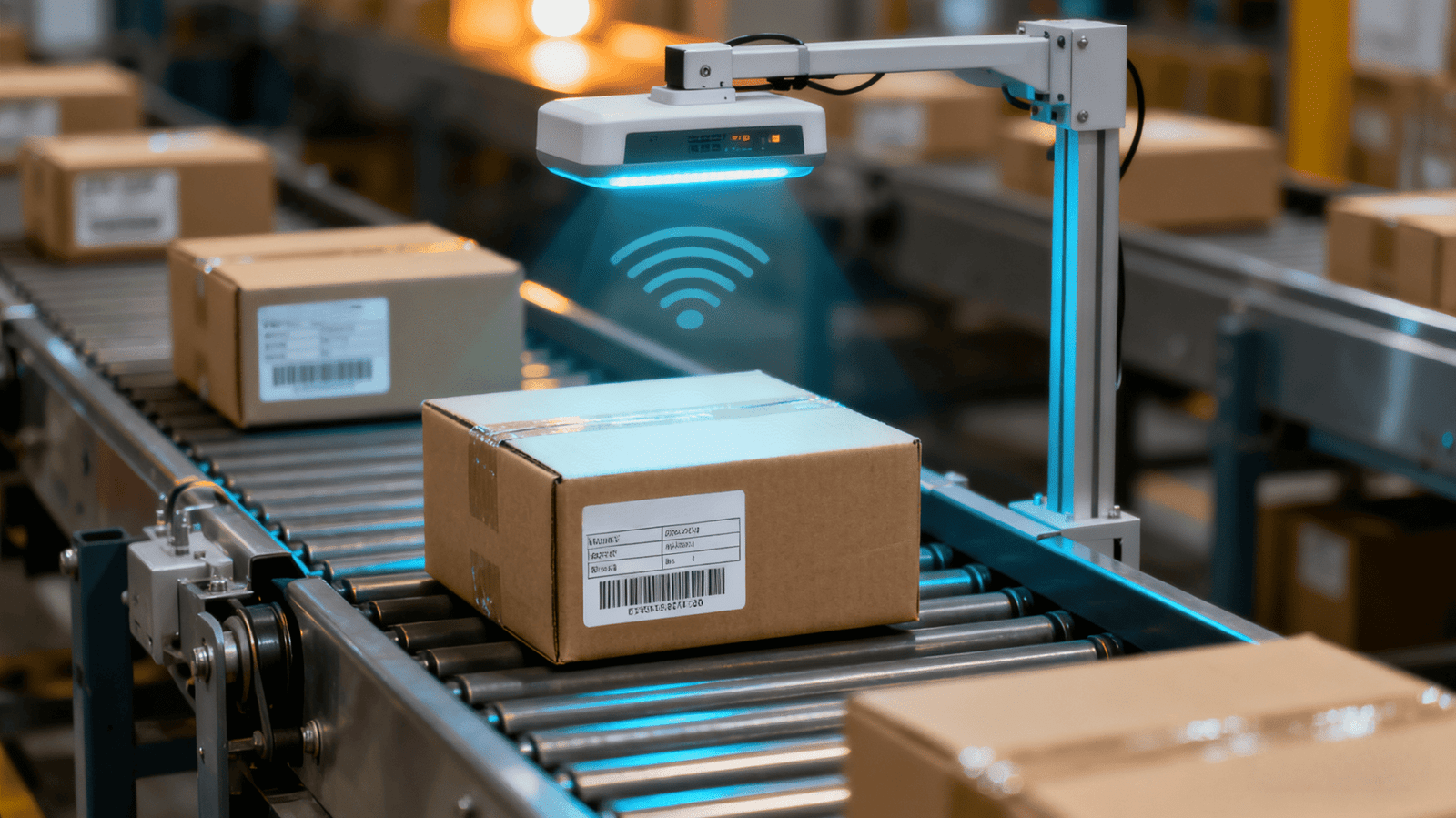
A passive RFID tag works without a battery. An RFID reader sends radio waves. The tag's antenna captures this energy to power its chip. The chip then sends its data back to the reader. This process happens very quickly.
Understanding the basics is the first step. But as a buyer, you need to know more to make the right choice. The tag is a simple device, but its parts matter. The interaction with the reader is also critical. Even the environment can affect performance. I have worked in RFID for years, from the assembly line to my current role. I learned that small details can make a big difference in a project's success. Let's break down these details so you can buy with confidence.
What Are the Key Components Inside a Passive RFID Tag?
Buying tags without knowing their parts is a risk. This can lead to system failure. This section breaks down the essential components for you so you can choose wisely.
A passive RFID tag has two main parts. First is the microchip that stores data. Second is the antenna that gets power and sends data. These parts sit on a base layer called a substrate.

When I first started on the Fongwah production line, I was amazed by these components. They looked so simple, but they had to be perfect. A tiny break in the antenna or a bad connection to the chip meant the tag would fail. This early experience taught me that quality construction is not a luxury; it is a necessity for a reliable RFID system. As a buyer, you are not just purchasing a tag. You are purchasing the reliability that comes from these well-made components. Let's look at each part.
The Chip (Integrated Circuit)
The chip is the brain of the RFID tag. It stores important information. This can be a unique ID number, product information, or other data. There are different types of memory on these chips. Some are read-only from the factory. Others let you write data once. Many allow you to read and write data many times. Your application determines which memory type you need. This choice directly impacts the tag’s function and cost.
The Antenna
The antenna is the tag's power source and communication line. It is a conductor, usually made of aluminum or copper. It is carefully designed to capture energy from the reader's radio waves. The antenna's shape and size are very important. They determine the tag's read range and performance. For example, tags used on metal or liquid-filled containers need specially designed antennas to work well.
The Substrate and Inlay
The chip and antenna together form an "inlay." This inlay is mounted on a material called a substrate. The substrate can be a flexible plastic like PET or simple paper. The final tag is then often encased in other materials to protect it. This could be a paper label, a hard plastic shell, or durable epoxy. As a buyer, the final form factor and housing material are critical for durability in your specific environment.
| Component | Function | Buyer's Consideration |
|---|---|---|
| Chip | Stores the tag's data. | What type of memory do I need (read-only, write-once, read-write)? |
| Antenna | Captures energy and transmits data. | What read range is required? Will the tag be near metal or liquids? |
| Substrate | Holds and protects the chip/antenna. | What is the operating environment (e.g., heat, moisture, impact)? |
How Does the Reader Power the Tag and Read its Data?
Your system fails if the reader and tag do not communicate well. This costs you efficiency and money. Let's explore this crucial energy and data exchange process.
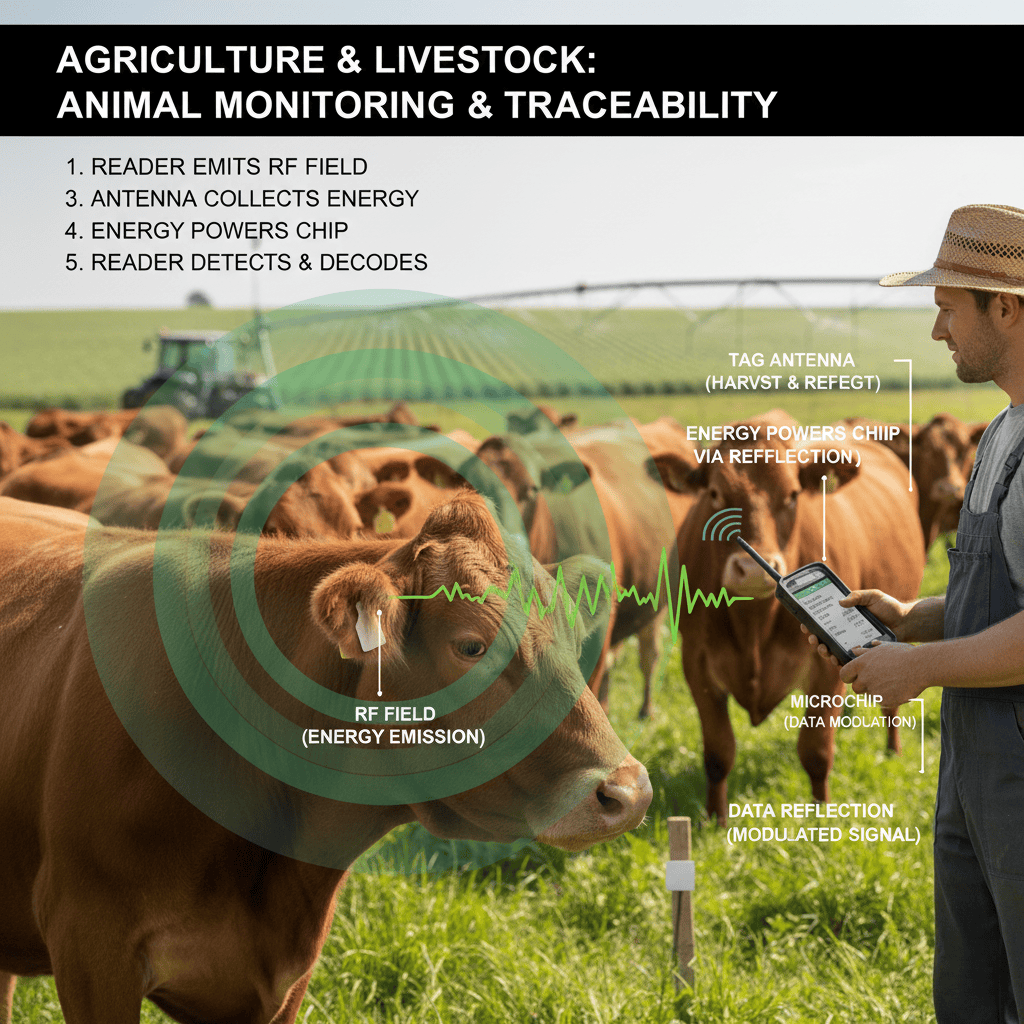
The RFID reader creates a radio frequency field. The tag's antenna collects this energy. The energy powers the chip. The chip then sends its data back by reflecting the reader's signal. The reader detects this reflection.
I remember a client who struggled with their inventory system. Their tags were not reading consistently. We visited their site and found their reader's power setting was too low for the distance they needed. It was a simple fix, but it highlighted a key point. The reader and tag work as a team. A buyer must consider both parts of the system together. The magic is in the physics of how they talk to each other.
The Power-Up Process
It all starts with the reader. The reader's antenna sends out radio waves in a specific frequency range. This creates an energy field around the reader. When a passive tag enters this field, its antenna picks up some of this energy. The energy travels from the antenna to the chip. This small amount of electricity is just enough to "wake up" the chip.
The Data Exchange: Backscatter
Now that the chip is powered on, it needs to send its data back. A passive tag does not have a transmitter to create its own signal. Instead, it uses a clever method called backscatter. The tag’s chip changes the load on its antenna. This action modifies the radio waves that are being reflected back to the reader. Think of it like using a mirror to reflect sunlight. By slightly tilting the mirror, you can create a flashing signal. The tag does something similar with the reader's radio waves.
The Reader's Role
The reader's antenna is highly sensitive. It is sending out a continuous wave, but it is also listening for any reflections. It can detect the tiny changes in the reflected signal sent by the tag. The reader's software then decodes these changes back into the tag's data. This whole process happens in milliseconds. It allows a reader to scan hundreds of tags per second. As a buyer, a reader's sensitivity and processing speed are key specs for high-volume applications.
| Coupling Method | Frequency | Mechanism | Key for Buyers |
|---|---|---|---|
| Inductive Coupling | LF, HF | The reader's coil induces a current in the tag's smaller coil, like a transformer. | Reliable for very short-range applications (e.g., access cards). |
| Backscatter Coupling | UHF | The tag's antenna reflects and modulates the reader's signal. | Best for long-range applications (e.g., warehouse inventory). |
Why Do Different Frequencies Affect a Tag’s Performance?
Choosing the wrong frequency leads to poor performance. Your whole project could fail. Let's match the right frequency to your specific needs so you can succeed.
Different frequencies have different properties. Low Frequency (LF) is good for short ranges and use near animals. High Frequency (HF/NFC) is for medium ranges. Ultra-High Frequency (UHF) gives the longest range but is sensitive to water and metal.
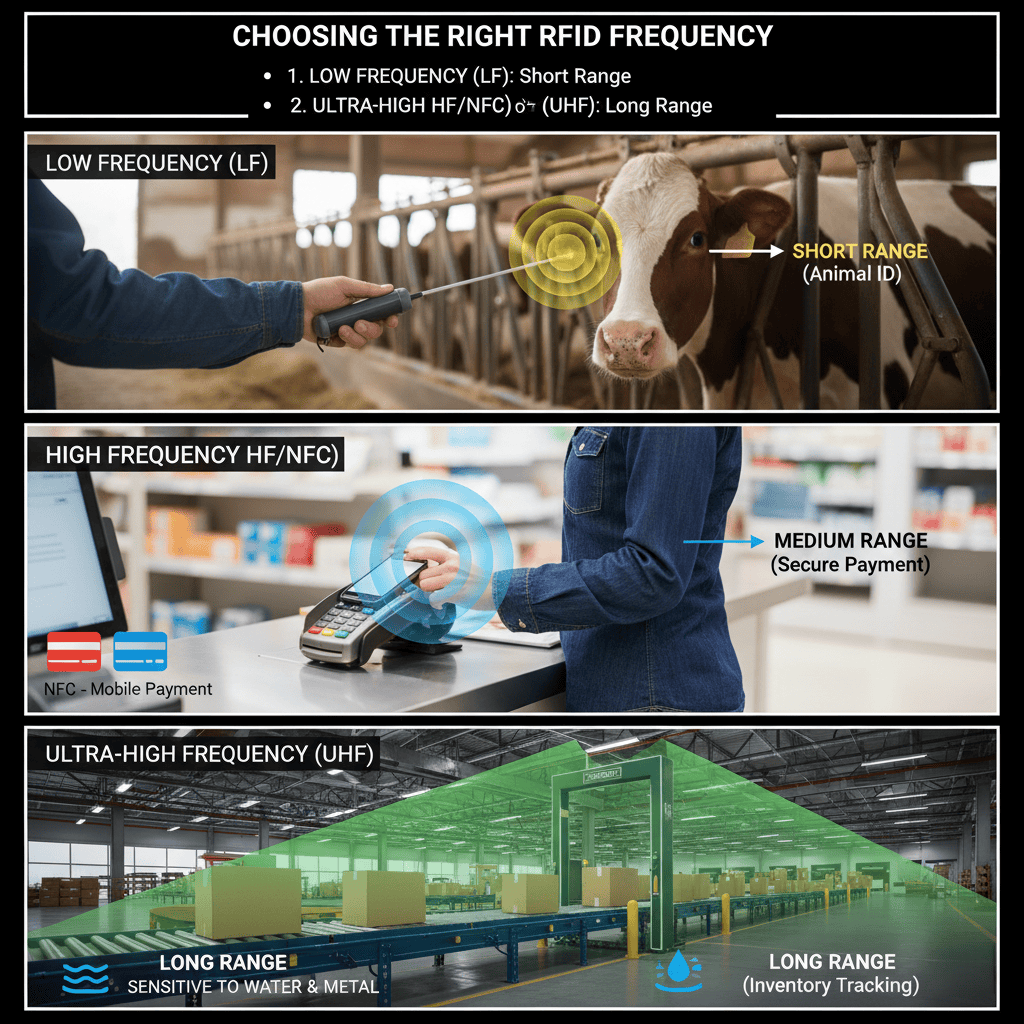
A customer once called me with a problem. They bought UHF tags to track wooden barrels of wine. The system did not work. The liquid inside the barrels absorbed the UHF radio waves. We helped them switch to HF tags, which can handle liquids better at close range. The system then worked perfectly. This experience shows why understanding frequencies is not just technical—it is a critical business decision for any buyer.
Low Frequency (LF) Tags
LF tags operate around 125-134 kHz. They have a short read range, usually a few inches. The signal is not very fast, but it is very reliable. LF waves can pass through materials like soil, water, and animal tissue. This makes them less affected by the environment. As a buyer, you should choose LF for applications like animal identification or access control fobs, where extreme reliability at a short distance is more important than range.
High Frequency (HF) Tags
HF tags operate at 13.56 MHz. They offer a medium read range, from a few inches to about three feet. There are strong global standards for HF, including the ones behind Near Field Communication (NFC) in your smartphone. This makes HF very versatile. They are a great choice for library book tracking, event ticketing, and payment systems. Buyers select HF when they need item-level tracking with a good balance of range and reliability.
Ultra-High Frequency (UHF) Tags
UHF tags operate between 860-960 MHz, with the exact frequency varying by region. These tags have the longest read range, up to 30 feet or more in good conditions. They also have very fast data transfer rates. This allows you to read hundreds of tags at once. However, UHF signals are easily reflected by metal and absorbed by water. Special "on-metal" tags are needed for metal surfaces. Buyers choose UHF for large-scale logistics, retail inventory, and supply chain management where speed and long range are essential.
| Frequency | Read Range | Key Advantage | Best Use Case for Buyers |
|---|---|---|---|
| LF (125-134 kHz) | Up to 10 cm | Works well near water/tissue. | Animal tracking, key fobs. |
| HF (13.56 MHz) | Up to 1 m | Global standards (NFC). | Library systems, ticketing, payments. |
| UHF (860-960 MHz) | Up to 10+ m | Longest range, fast reading. | Warehouse inventory, supply chain. |
Conclusion
Understanding these basics helps you choose the right tag. A good choice is the foundation for your project's success. My team and I at Fongwah are here to help.