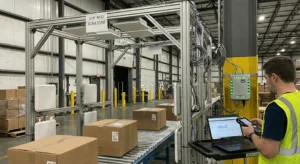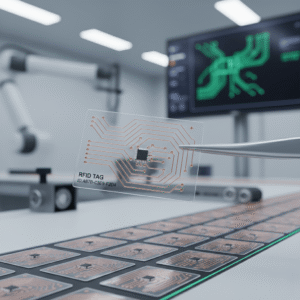

Lost tools on a busy job site cause massive delays and destroy your project budget. You need a system that tracks every item automatically.
RFID monitors construction tools1 by attaching durable tags2 to equipment and installing readers at key zones. These readers scan tags instantly and send data to a central system. This process provides real-time location updates3, tracks usage history, and automates inventory checks4 to prevent expensive theft.
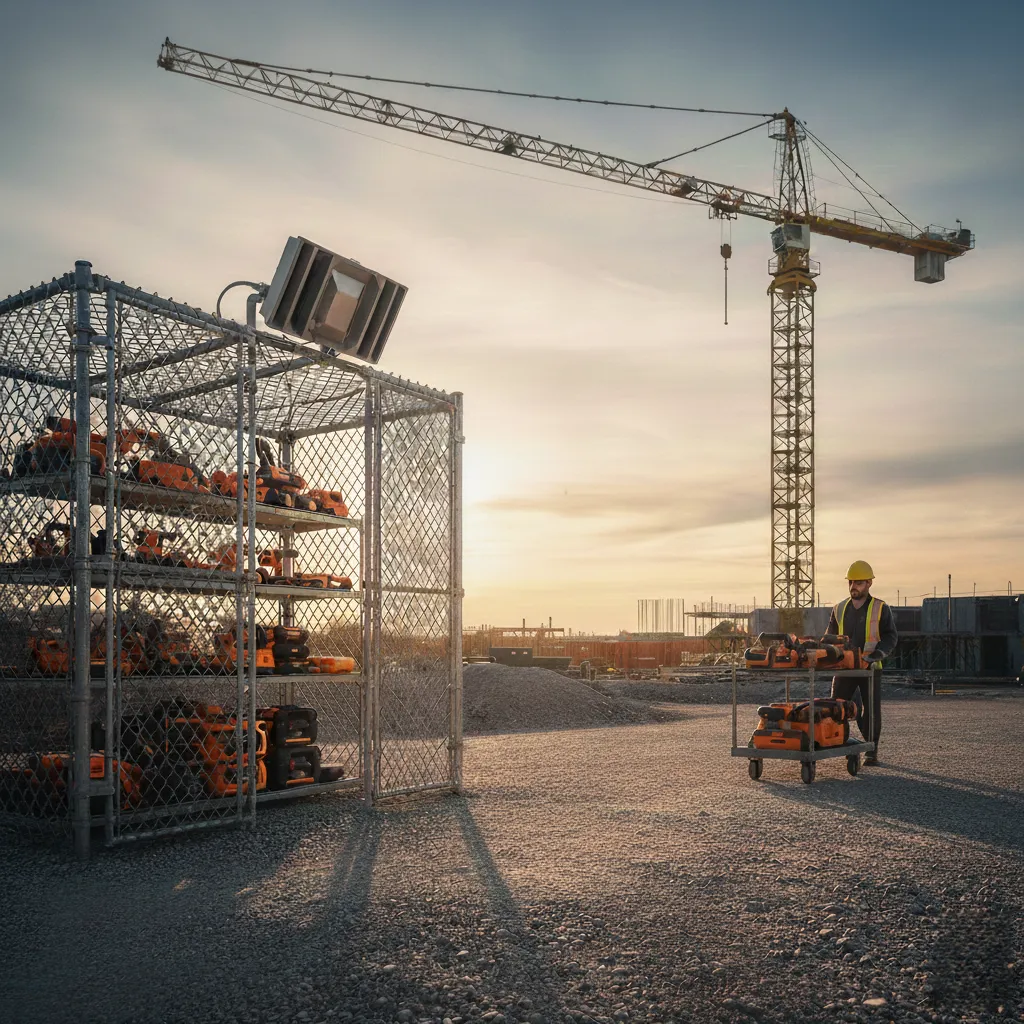
I remember my days as a production line operator before I became a manager at Fongwah. We had a construction client who was losing high-value drills every week. It was chaos. That experience taught me that technology is not just about chips; it is about solving real pain points. Below, I will break down exactly how you can implement this solution.
How does the hardware setup work for site monitoring?
Using the wrong hardware in a harsh environment guarantees system failure and wasted money.
The hardware setup requires rugged RFID tags optimized for metal surfaces and fixed readers at entry points. Antennas create a detection zone that captures tag data as workers move. This physical network connects directly to your server for immediate processing and analysis.
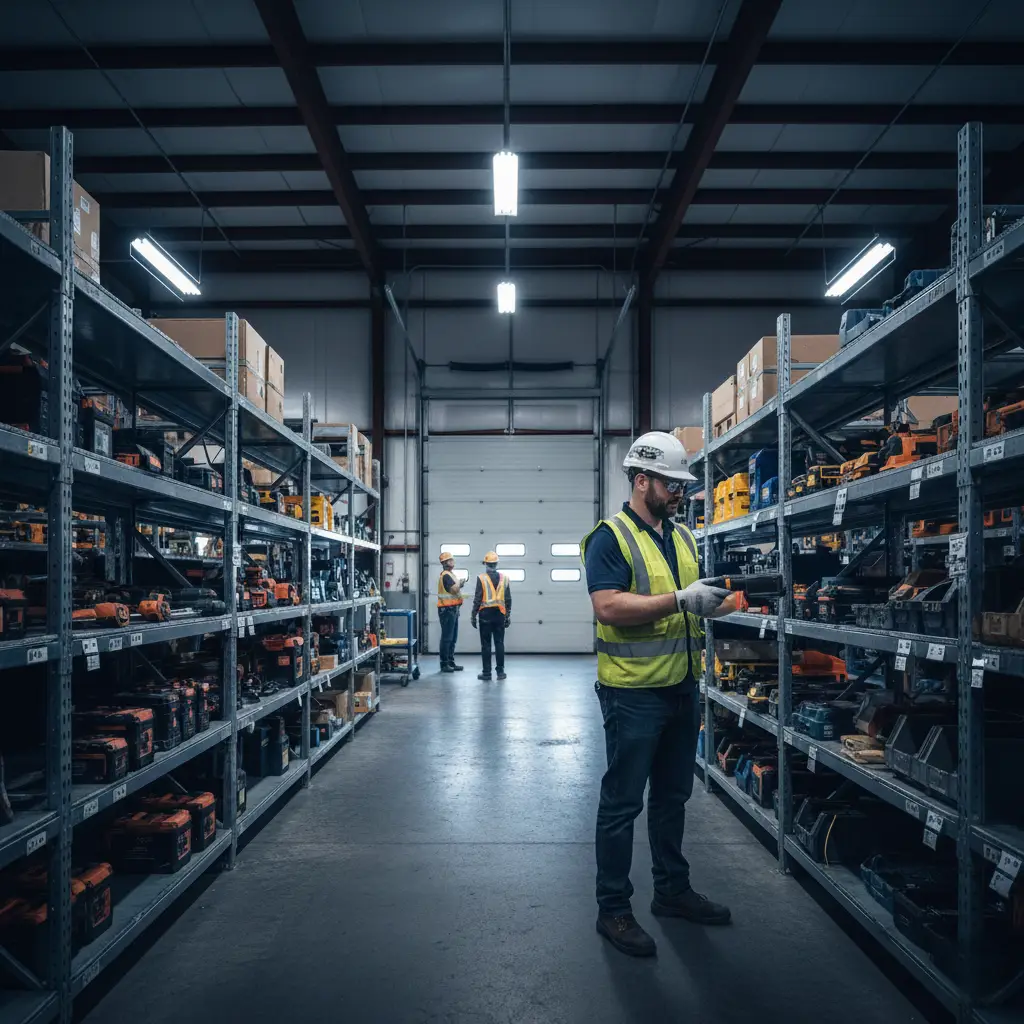
Choosing the right hardware is the foundation of any successful RFID system. In my five years in this industry, starting from the factory floor, I have seen many projects fail because users ignored the physical environment. Construction sites are full of metal and interference. You simply cannot use standard paper labels here. You must use anti-metal tags5. These tags have a special layer that prevents the metal tool from detuning the tag antenna.
Critical Hardware Components
You need to understand the interaction between the reader and the tag. For real-time tracking, we usually use UHF (Ultra High Frequency) RFID6. This allows for a longer read range, often up to 10 meters. You install fixed readers at the tool crib door or the site gate. When a worker walks through this "portal," the reader energizes the tags on the tools in their bag.
Interference and Placement
Placement is critical. If you put a reader behind a steel beam, you will block the signal. You must position antennas to cover the widening of the passage. Also, consider handheld readers for spot checks. A fixed reader tells you when something leaves a zone. A handheld reader helps you find a specific hammer lost in a pile of drywall.
Here is a breakdown of tag types suitable for this environment:
| Tag Type | Best Application | Range | Durability |
|---|---|---|---|
| Passive UHF (On-Metal) | Hand tools, drills, saws | 2-8 Meters | High (Impact resistant) |
| Active RFID | Generators, heavy machinery | 30-100 Meters | High (Battery powered) |
| Flexible PCB Tags | Curved surfaces, helmets | 1-3 Meters | Medium |
| Ceramic Tags | Small tools, wrenches | 0.5-2 Meters | Very High (Heat resistant) |
What role does software play in real-time data processing?
Collecting thousands of tag reads is useless if your team cannot analyze the data.
Software acts as the brain, converting raw radio signals into a clear inventory list. It maps tool locations, alerts managers about unauthorized removals, and schedules maintenance based on usage. This digital integration ensures that hardware signals make sense to human users.
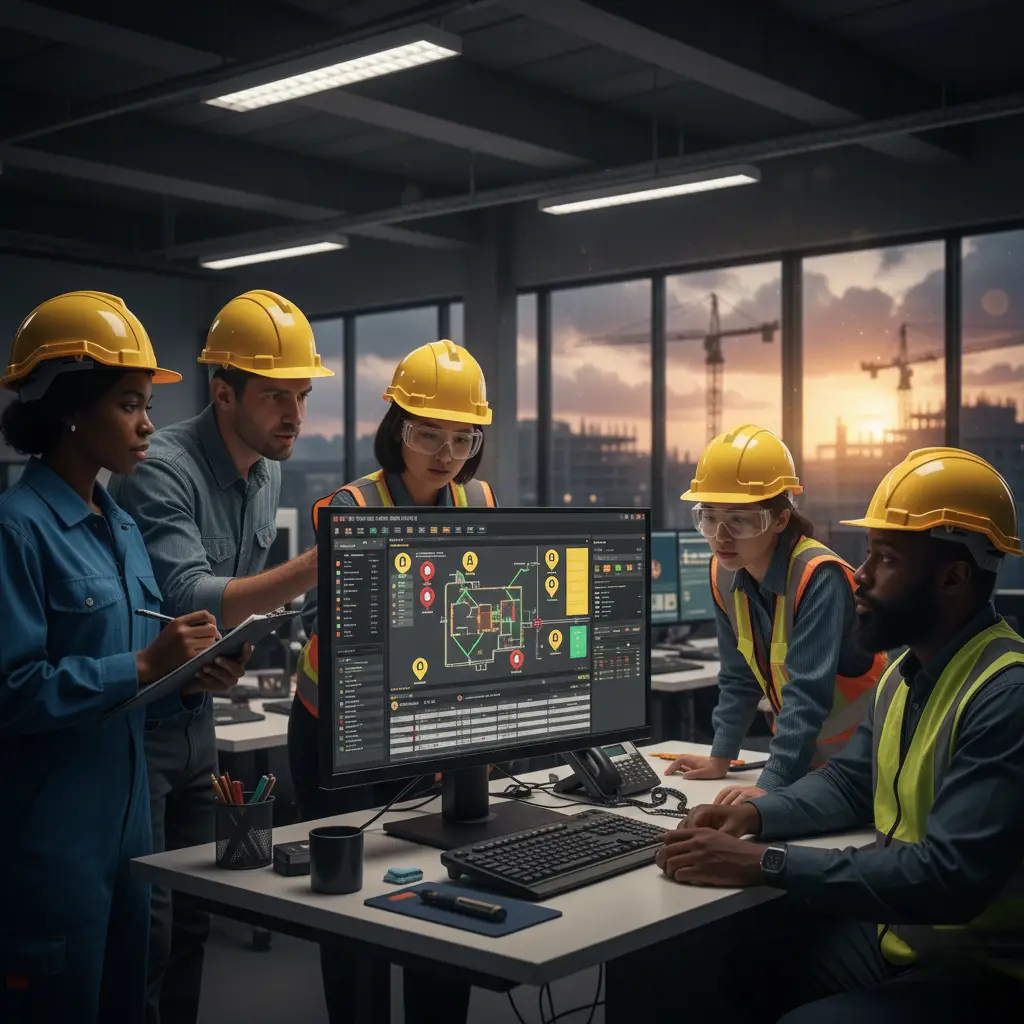
The hardware gathers the raw data, but the software delivers the value. I often tell clients that the reader is just the messenger. The software is the manager. In a real-time system, the reader sends data packets continuously. If a tool sits near an antenna, it might be read 100 times a second. The software must filter this. We call this "filtering" or "middleware logic." It prevents your database from crashing due to duplicate information.
converting Signals to Actions
The software needs to link the unique Tag ID (EPC) to the asset details. When the system sees tag "E200...", the screen should display "DeWalt Impact Driver - Unit 4." This requires a robust database. Furthermore, the software handles the logic of "events." An event is not just "I see the tag." An event is "The tag was in the crib, and now it is at the Gate 1 Exit."
Middleware Functions
This is where the technical magic happens. The middleware sits between the reader and your ERP system. It handles the heavy lifting. It determines directionality. By using multiple antennas, the software calculates RSSI (signal strength7) to know if a tool is entering or leaving.
Here is how the software processes the data flow:
| Data Stage | Function | value to User |
|---|---|---|
| Raw Read | Captures EPC code + Timestamp | Proof of presence |
| Filtering | Removes duplicates | Reduces data noise |
| Association | Links ID to Asset Name | Human-readable info |
| Logic Rule | Checks "Is this authorized?" | Security validation |
| Alert/Action | Triggers email or alarm | Immediate response |
Can RFID prevent theft and improve worker accountability?
Theft destroys trust among your crew and delays critical construction phases significantly.
RFID links every tool to a specific worker's ID badge during the check-out process. If an item leaves a zone without authorization, the system triggers an alarm instantly. This digital paper trail holds everyone accountable and reduces the temptation for theft.
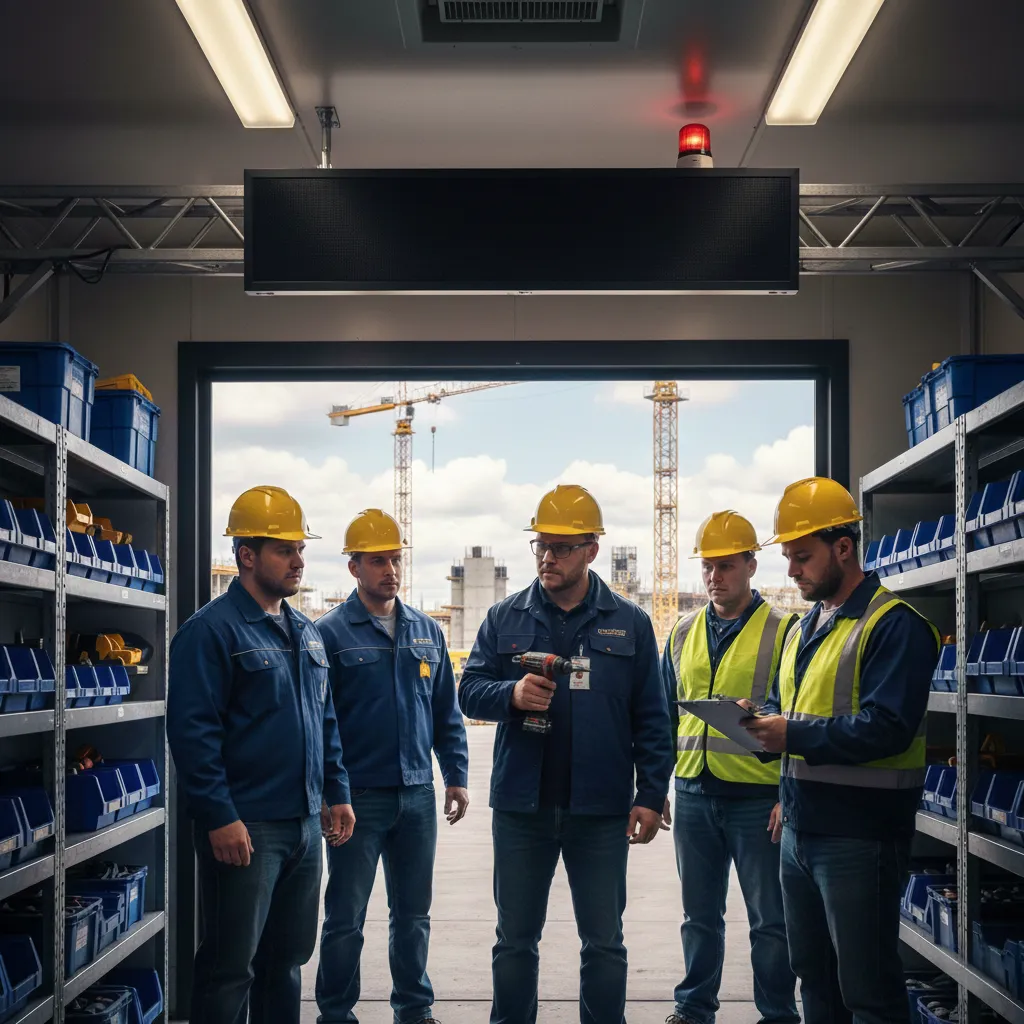
Technically, RFID acts as a silent security guard. In my experience working with engineers, I know that the "human element" is the hardest variable to control. RFID removes the guesswork. We implement this by creating "Automated Tool Cribs." A worker swipes their employee badge (which is also an RFID card). Then, they pick up the tool. The system pairs the Employee ID with the Tool ID.
The Check-In/Check-Out Logic
When the worker takes the tool, the system starts a timer. We know exactly who has the equipment. If that tool is seen at the exit gate but was never checked out, the alarm sounds. This is not just about punishment. It is about finding items quickly. If a specialized saw is missing, you do not need to search the whole site. You check the software. It says, "David Blaine took this saw at 08:00 AM."
Maintenance and Safety
Accountability also applies to safety8. Tools need calibration9. If a tool is due for an inspection, the RFID system can lock the checkout process. The software will warn the user: "Do not use this. Inspection required." This prevents accidents and liability issues. It protects the company and the worker.
Here is the impact on site operations:
| Feature | Traditional Method | RFID Real-Time Method |
|---|---|---|
| Checkout | Paper log or Excel sheet | Instant automatic scan |
| Theft Detection | Discovered days later | Immediate alarm trigger |
| Inventory Time | Hours or days | Minutes |
| Accountability | "I don't know who had it" | "User X has the item" |
| Maintenance | Often missed | Automated alerts |
Conclusion
RFID transforms chaotic construction sites into organized, efficient systems. By combining rugged hardware with smart software, you save money, stop theft, and ensure your projects remain safe and on schedule.
---Explore how RFID technology can enhance tool tracking and reduce project delays. ↩
Learn about the importance of durable tags in ensuring effective RFID tracking. ↩
Discover how real-time updates can streamline operations and enhance efficiency. ↩
Find out how automation can save time and reduce errors in inventory management. ↩
Explore the role of anti-metal tags in ensuring reliable RFID performance on construction sites. ↩
Understand the significance of UHF RFID in achieving long-range tracking. ↩
Explore the importance of signal strength in ensuring effective RFID communication. ↩
Explore how RFID technology can enhance safety measures and prevent accidents. ↩
Learn about the significance of regular calibration for maintaining tool safety and performance. ↩