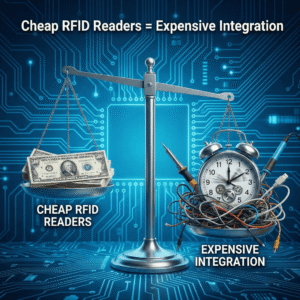
Integrators constantly blow hardware budgets trying to retrofit clunky plastic desktop readers into sleek kiosks. I’ve seen deployment schedules derailed simply because generic hardware lacked a stable SDK for the engineering team, bleeding thousands in wasted developer hours.
Choosing between a desktop RFID reader and an OEM RFID module dictates your deployment success. Desktop units excel at HR issuance, while bare-metal modules seamlessly integrate into kiosks. Partnering directly with a manufacturer guarantees a unified RFID reader SDK, ensuring rapid, cost-effective scaling for global tech stacks.
Let's stop forcing square hardware into round kiosks and engineer a deployment strategy that actually makes sense for your technical architecture.
The Desktop Issuance Dilemma: Are Your HR Terminals Handicapping Your Software Rollout?
Your dev team spent months perfecting an encrypted access platform, but procurement bought cheap, generic USB readers for the HR desk. Now, your software simply cannot write to the cards.
A high-performance desktop RFID reader is critical for initializing secure credentials. By deploying SDK-ready hardware, administrative staff can successfully encode custom cryptographic payloads onto standard credit-card-sized RFID tags directly through your proprietary software interface, rather than relying on vulnerable keystrokes.
Technical Performance Comparison
| Feature/Metric | Generic USB Keyboard Wedge | Fongwah S9-BU-13-00 Desktop Reader |
|---|---|---|
| Data Interaction | Read-Only (Public UID Emulation) | Full Read/Write via C#/Java SDK |
| Credential Support | Contactless Only (ISO 14443A) | Contact & Contactless (ISO 14443A + ISO 7816) |
| Security Payload | Plaintext output to OS | Encrypted Custom Applet Injection1 |
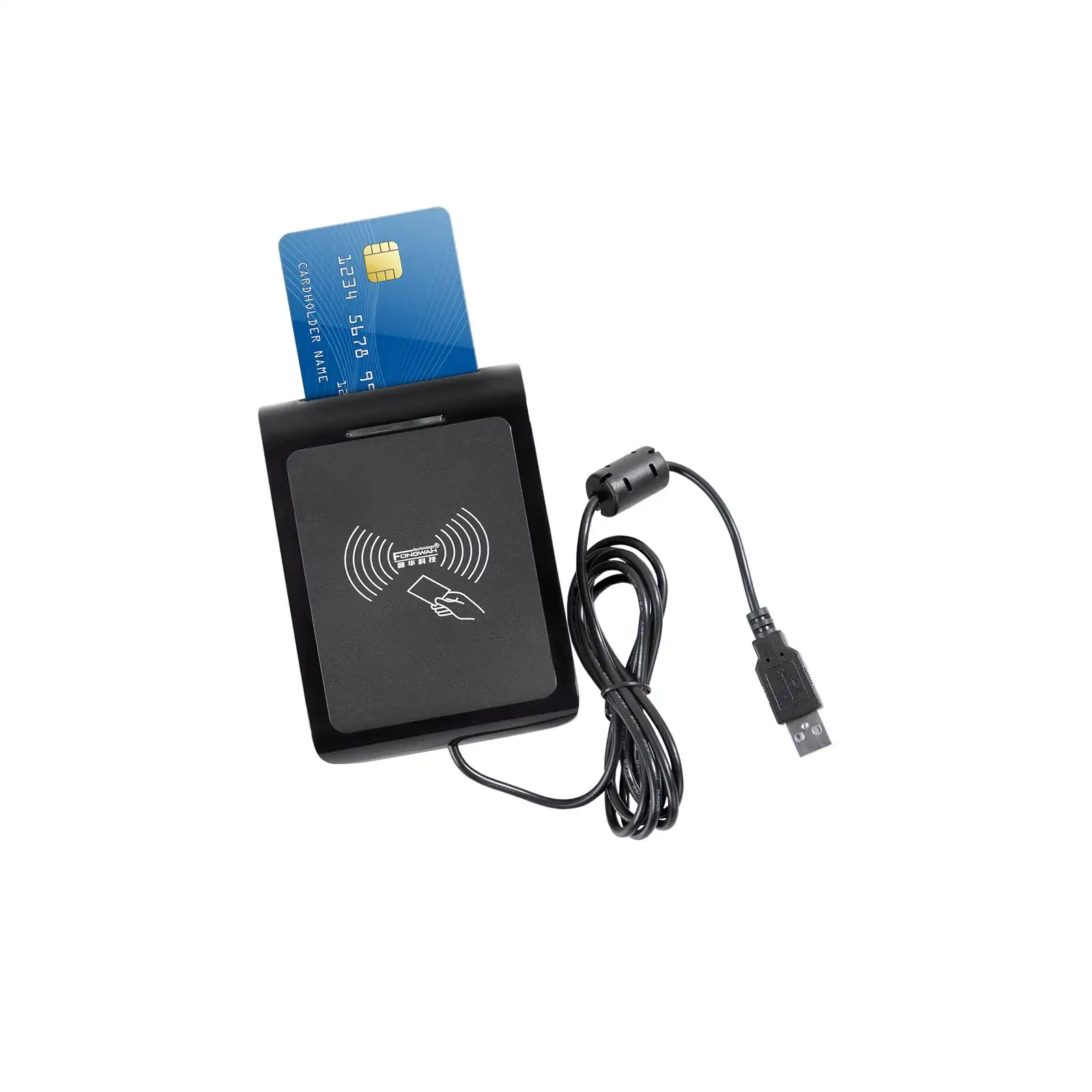
William, I see this critical error every week. A software company builds a brilliant, highly secure identity management system, but they leave the hardware specification to a junior buyer. The buyer searches for "13.56MHz reader" and buys a $15 keyboard emulator.
When your HR team tries to issue a secure employee badge, that generic reader merely spits the public UID into a text field. You cannot build a modern enterprise tech stack on public UIDs. You need to write your own proprietary encryption keys directly into the secure sectors of the credential.
The Power of Native SDK Interfacing
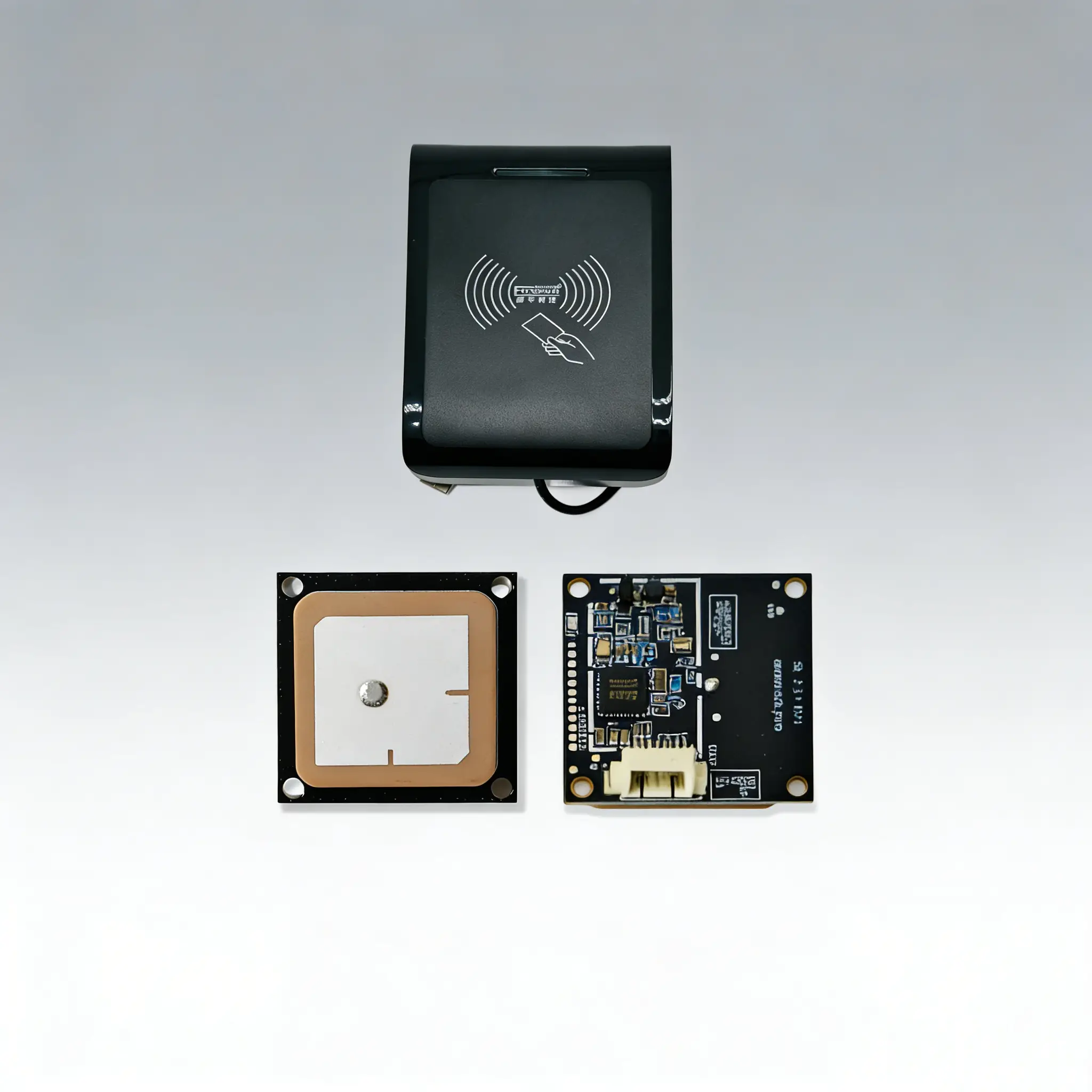
This is why we built the S9-BU-13-00. It is a dedicated desktop issuer operating at 13.56MHz. Crucially, it handles both Contactless smart cards AND Contact chips (ISO 7816) over a standard USB interface.
Because we provide the native RFID reader SDK, your software developers can command the hardware to authenticate against the card’s SAM (Secure Access Module) and write your customized security payload directly onto the employee's credit-card-sized tag. You control the cryptographic handshake locally within your application, completely bypassing the vulnerabilities of Windows keyboard drivers.
Embedded Modules vs. Plastic Boxes: Is Your Kiosk Hardware Bleeding Margin?
System integrators constantly try to bolt finished, plastic-cased desktop readers to the inside of metal kiosks. This creates massive RF interference, overheating, and destroys your product's internal footprint.
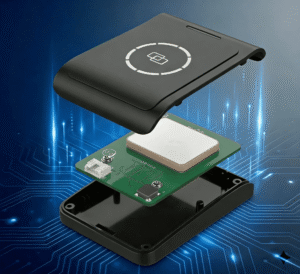
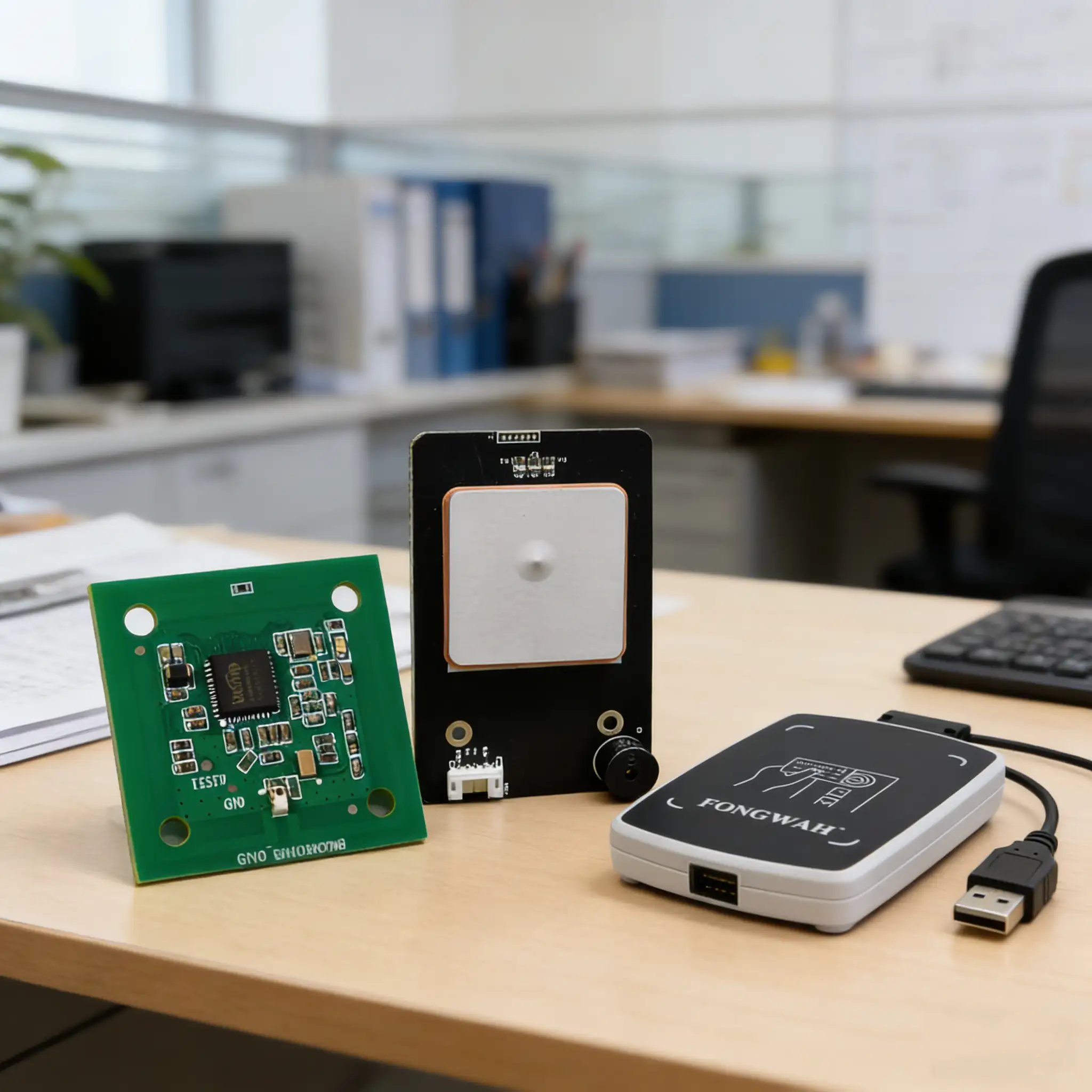
True OEM integration requires ditching the plastic casing for a bare-metal OEM RFID modulee. By designing ultra-compact modules directly into your proprietary kiosk's PCB layout, you eliminate bulky cabling, optimize antenna resonance, and drastically reduce your per-unit bill of materials.
Technical Performance Comparison
| Feature/Metric | Bolted-on External Desktop Reader | Fongwah U1-CT-01 Embedded Module |
|---|---|---|
| Physical Footprint | Bulky (100x100mm+ plastic case) | Ultra-compact (30x30mm bare PCBA) |
| RF Tuning inside Metal | High Interference (Reflective detuning) | Precision 1 Ceramic Antenna (50cm range) |
| Integration Method | Messy USB Cabling | Direct Pin/PCB Integration |
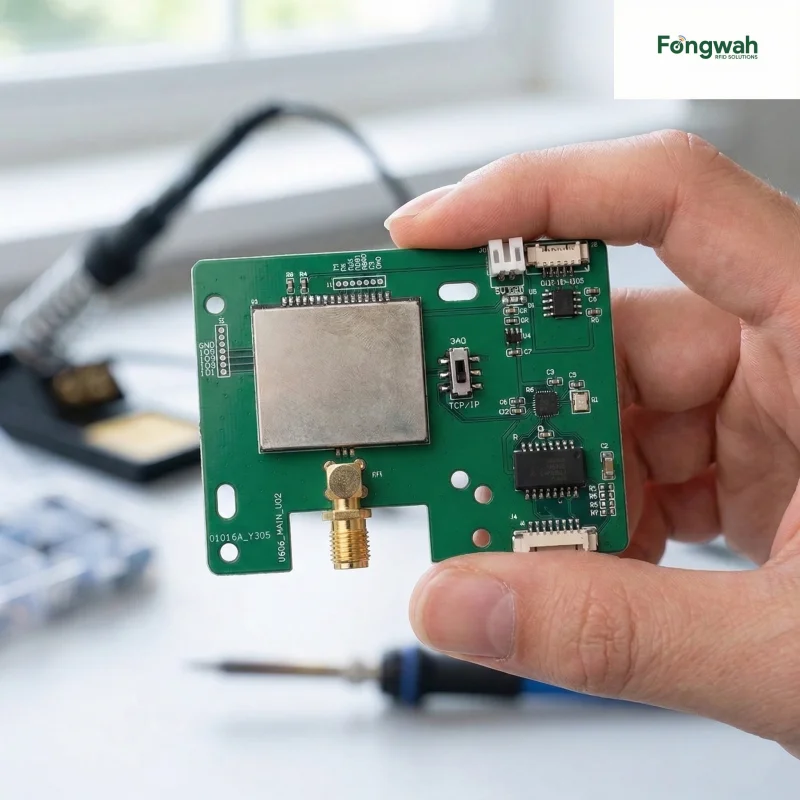
William, stop taping finished boxes inside your sleek self-checkout terminals. RF physics inside an enclosed metal space is absolutely brutal. If you throw a finished desktop reader inside a kiosk, the RF waves bounce off the metal chassis, causing ghost reads and destroying your read range. Furthermore, you are paying for an ABS plastic shell, USB cables, and packaging that your end-user will never see.
Engineering for the Edge
When you build a self-service terminal, a transit turnstile, or an industrial HMI, you need an OEM RFID module. You need the bare engine.
Let's look at the Fongwah U1-CT-01. This is a UHF module engineered specifically for highly constrained embedded environments. It gives you a ridiculously small 30x30mm footprint equipped with 1 integrated ceramic antenna. You drop this directly onto your carrier board. It pushes a highly controlled 0-20dBm power output, netting you a precise 50cm read range at 30 reads/sec.
This means when a user presents a tag at the kiosk, the module reads it instantly without bleeding over and accidentally reading the tag of the person standing in the next lane. You cut your hardware costs in half, you eliminate USB disconnect errors, and you own the complete hardware aesthetic.
The Manufacturer Advantage: Are You Overpaying a Middleman for Buggy Middleware?
Buying hardware from a local distributor feels safe until you find a fatal bug in the DLL file. When your software crashes, the middleman cannot fix the core firmware.
Partnering directly with a B2B RFID supplier and manufacturer guarantees immediate engineering-level support. Direct sourcing secures highly competitive pricing on high-performance RFID hardware and provides your global software teams unhindered access to source API documentation for rapid, bottleneck-free deployment.
Technical Performance Comparison
| Feature/Metric | Third-Party Distributor Hardware | Fongwah U8 Fixed Reader Ecosystem |
|---|---|---|
| SDK Troubleshooting | Forwarded to an overseas ticket queue | Direct WhatsApp access to OEM Engineers |
| Performance Ceiling | Limited by generic component sourcing | -80dBm sensitivity at 500 reads/sec |
| Hardware Revisions | Subject to silent factory changes | Strict BOM control for long-term projects |
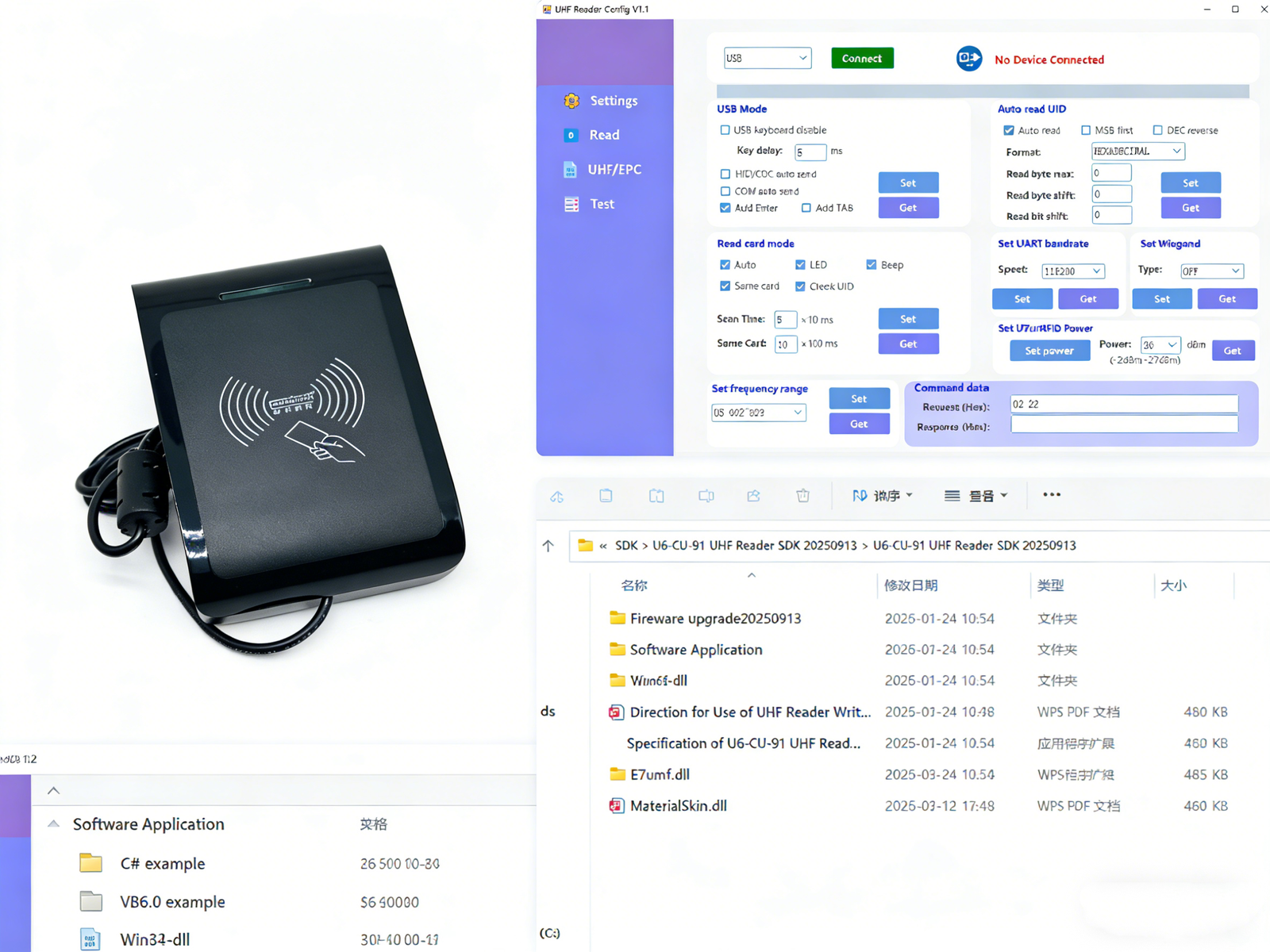
Let's talk about the reality of global tech stacks, William. If you are a software developer building a multi-site warehouse management system (WMS), your software is only as good as the data being fed into it.
When you buy high-performance RFID hardware through a third-party distributor, you are buying a black box. If the TCP/IP connection starts dropping packets under heavy tag loads, the distributor's sales guy can't help you. He didn't write the firmware.
Heavy Industrial Reliability
As a 20-year dedicated factory, we own the intellectual property from the silicon trace up to the API wrapper. When you need heavy-duty warehouse tracking, you deploy the Fongwah U8 Fixed Reader.
This isn't a toy. It handles 500 reads/sec via 4 SMA ports, utilizing an included 4dBi circular antenna to achieve up to a 10m range. But more importantly, it features a staggering -80dBm sensitivity and communicates via rock-solid RS232 or TCP/IP.
Because you are buying from the actual B2B RFID supplier, your network engineers get the raw network protocols and the exact SDK required to pipe that 500 reads/sec data stream directly into your cloud server. No buggy middleware, no licensing fees, and no middleman markups. Just pure, unadulterated engineering throughput.
Frequently Asked Questions
Why should I choose an OEM module over a finished desktop reader for a kiosk?
Finished desktop readers in plastic cases suffer from RF interference and overheating when placed inside metal kiosks. A bare-metal OEM module like the Fongwah U1-CT-01 allows for direct PCB integration, optimized antenna resonance, and a significantly smaller footprint.
Does Fongwah provide SDK support for proprietary software integration?
Yes. Unlike generic keyboard wedge readers, Fongwah’s professional-grade hardware comes with a native RFID reader SDK (C#, Java, etc.). This allows developers to handle complex cryptographic handshakes and direct read/write commands beyond simple UID emulation.
Can Fongwah RFID readers handle both contact and contactless cards?
Certain models, such as the S9-BU-13-00, feature a dual-interface design that supports both ISO 14443A contactless tags and ISO 7816 contact chips, making them ideal for high-security enterprise ID issuance.
Conclusion & CTA (Call to Action): Stop bleeding engineering hours on cheap hardware. The true cost of an RFID reader is integration time. Prioritize robust SDKs and industrial stability to protect your actual project margins. Stuck on integration or sick of buggy DLLs? Ping me on WhatsApp. I'll send you a working C# sample code snippet right now.
---
Explore how encrypted applet injection boosts security for employee badge issuance. ↩