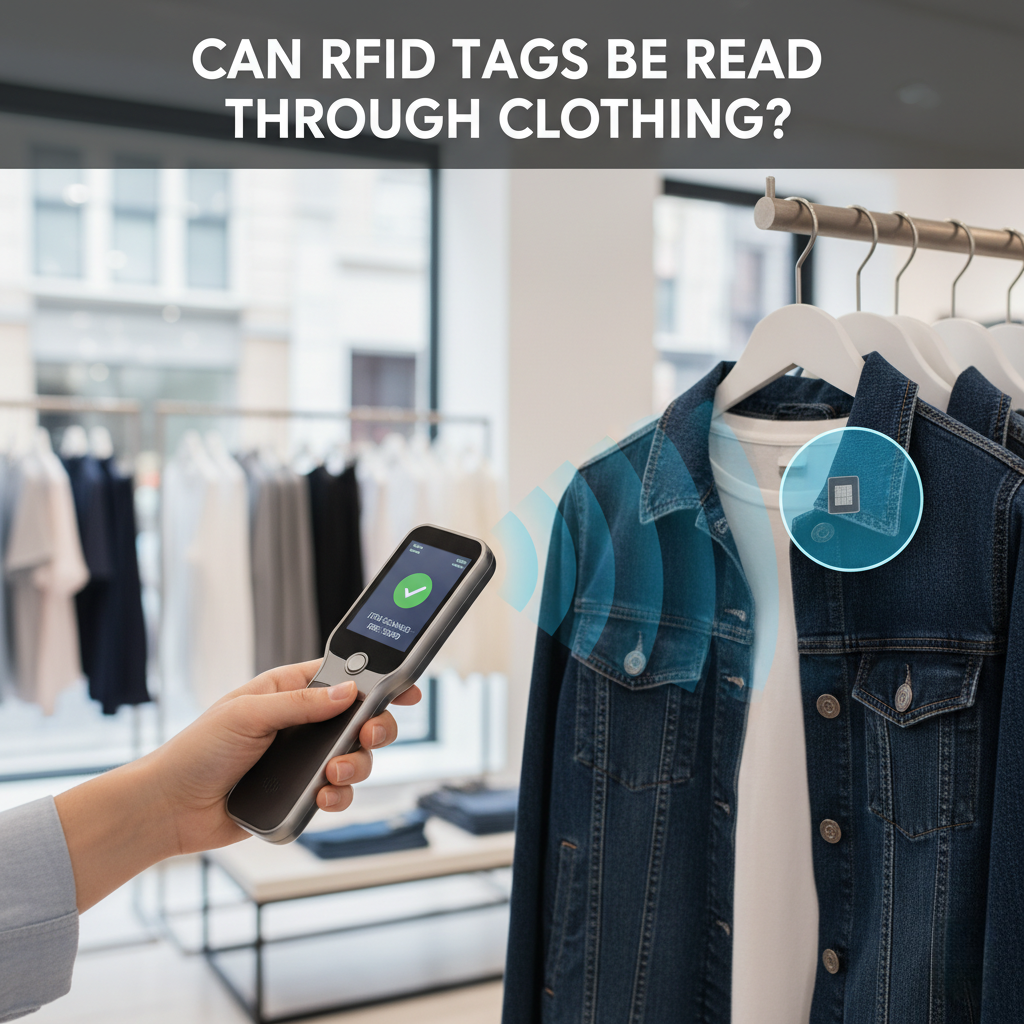
Are you worried your RFID system1 will fail because of clothing? This common problem can stop a project, costing you time and money on something that should be simple.
Yes, most RFID tags can easily be read through clothing. Success depends on the RFID frequency2, the tag itself, the reader's power, and the type of fabric or material.
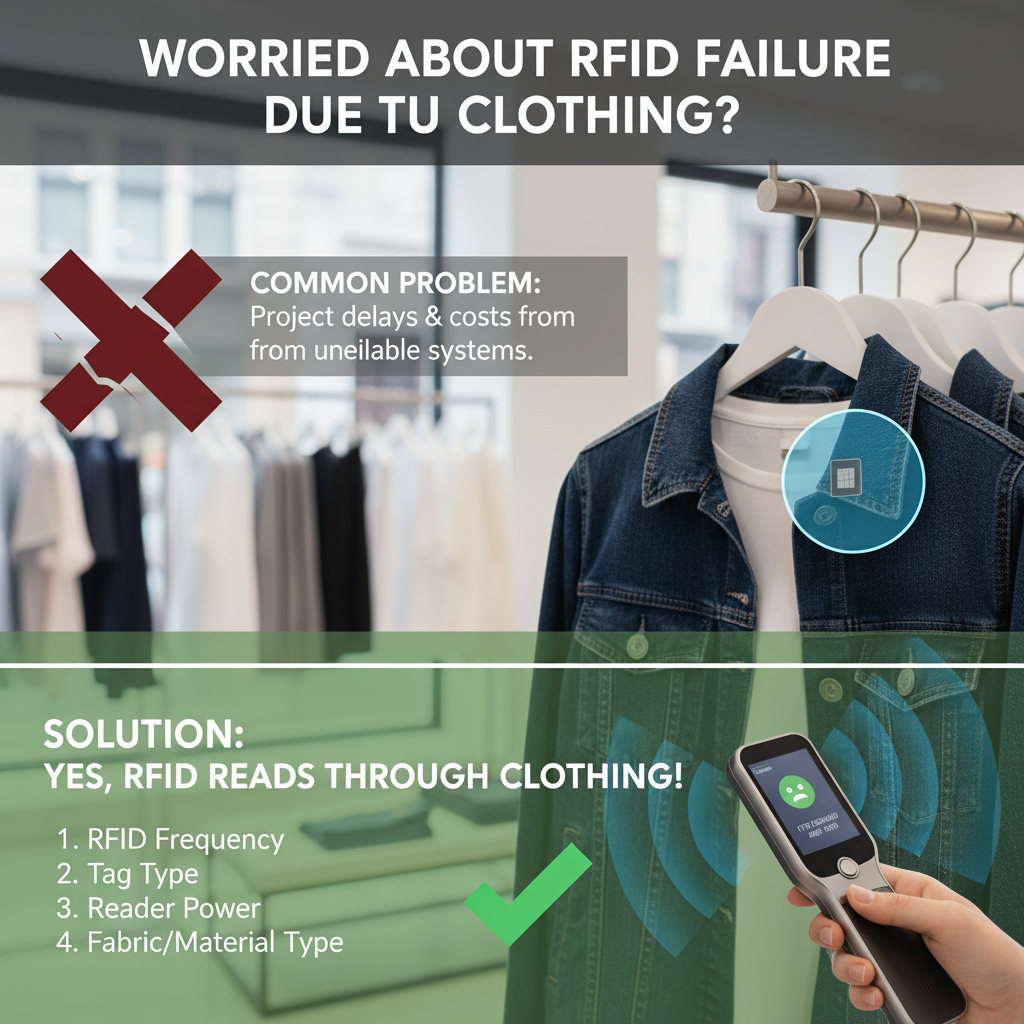
As someone who has worked with RFID for 20 years, I see this question all the time. System integrators like Hardwell need more than a simple 'yes'. He needs to know the details to build a bulletproof system for a warehouse or retail store. A system that just works. The answer is not always simple. It depends on several things. So, let's break down the factors that matter. Understanding them will help you choose the right equipment and avoid common failures. This is how you build a system that is stable and efficient.
What types of clothing materials3 can block RFID signals?
Your RFID system1 is failing. A simple jacket seems to block the signal. This can cause major delays and frustration for your project and your client.
Most common fabrics like cotton, wool, and polyester do not block RFID signals. However, materials with metal, like metallic threads, or dense liquids, like a very wet coat, can interfere with or completely block the signal from being read.
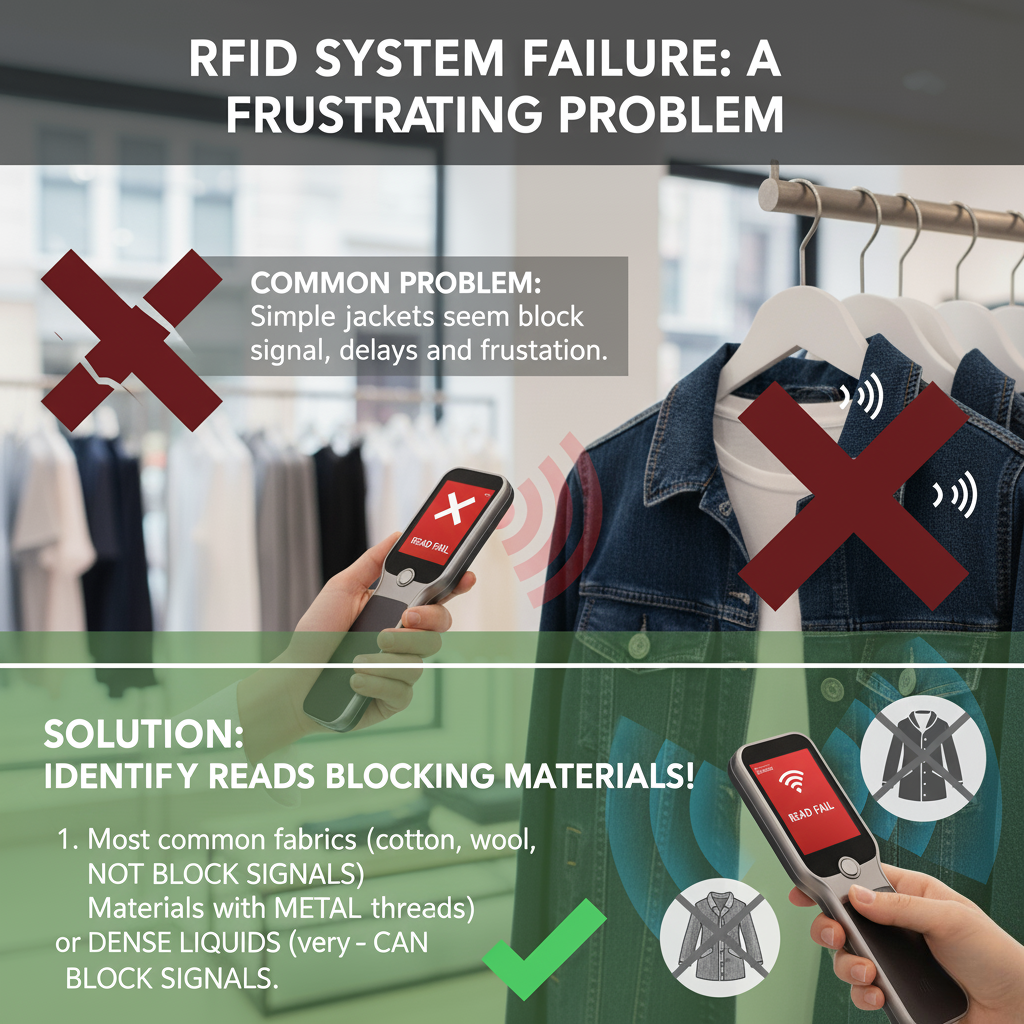
RFID technology works using radio waves. Think of it like your car radio. The signal travels through walls and other objects. Most clothing fabrics are like air to these radio waves. They pass right through. But some materials can cause big problems. The two main enemies of RFID are metal and water. Metal reflects radio waves. This can detune the tag's antenna, making it invisible to the reader. Water absorbs the energy from radio waves, which weakens the signal. A soaked jacket can absorb enough energy to prevent a read. I once helped a client who ran a high-end retail store. Their new inventory system4 was failing. We found that some expensive jackets had fine metallic threads woven in for style. The tags were placed right behind these threads. We simply moved the RFID tag to the care label, away from the metal, and the system worked perfectly. This shows that small details are critical.
Common Signal Blockers in Apparel
| Material | Signal Interference | Why it Interferes |
|---|---|---|
| Cotton/Polyester | Very Low | These materials are transparent to radio waves. |
| Denim | Low | Usually fine, but a very dense weave can slightly weaken a signal. |
| Leather | Low to Medium | The signal can be slightly weakened, especially if the leather is thick or treated. |
| Wet Clothing | Medium to High | Water absorbs radiofrequency energy, which weakens the signal strength. |
| Metallic Threads | High | Metal reflects and detunes the RFID tag's antenna, blocking the read. |
| Foil-Lined Pockets | Very High | Metal foil creates a barrier that completely blocks radio signals. |
How does RFID frequency2 affect reading through clothing?
Your RFID reader can't see the tags, and you're not sure why. The problem might not be the reader or the tag. Using the wrong frequency can make your whole system fail.
UHF (Ultra-High Frequency)5 is the best choice for reading through clothing. It has a long read range and can read many tags at once. LF and HF frequencies have shorter ranges and are less suited for this specific task.
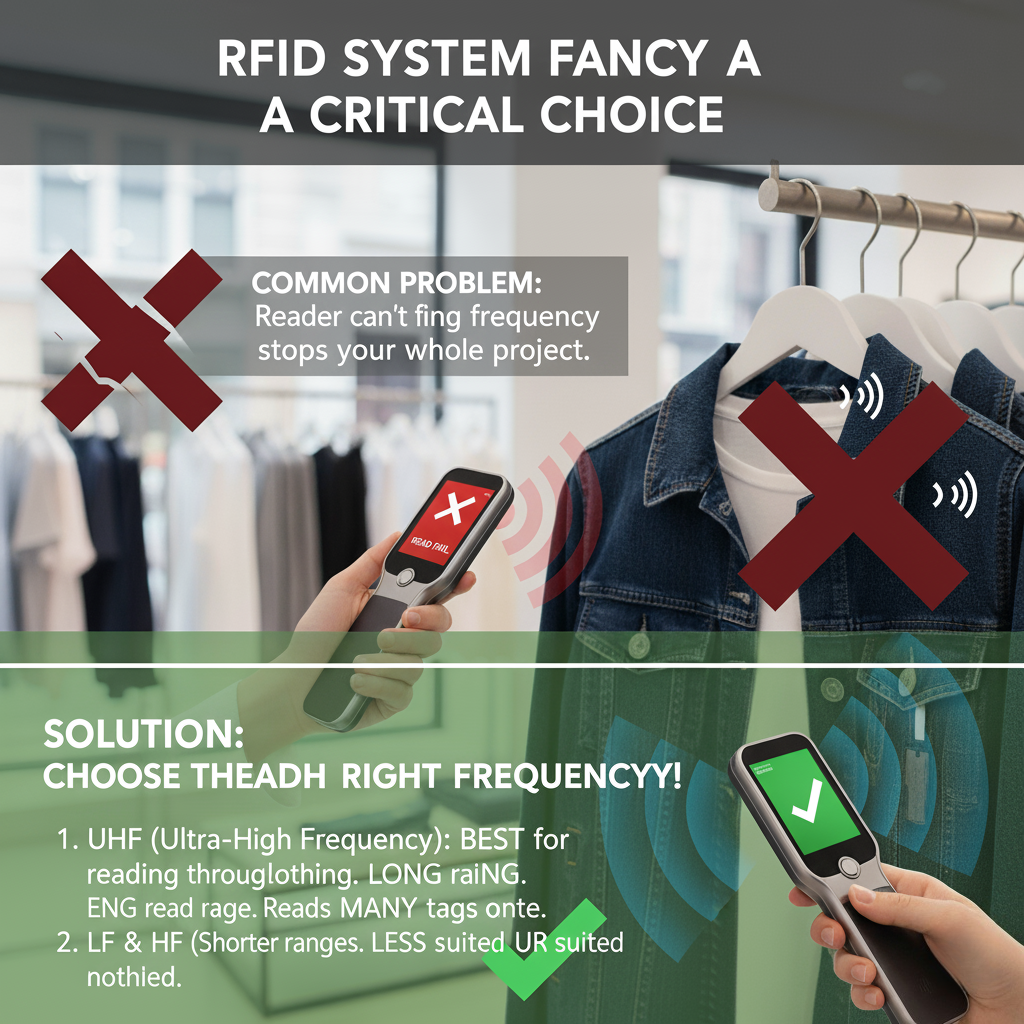
There are three main frequency bands in RFID: Low Frequency (LF), High Frequency (HF), and Ultra-High Frequency (UHF). Each one behaves differently. For reading tags through clothing, especially in bulk, UHF is the champion. UHF signals (860-960 MHz) have a long read range, up to several meters. They also penetrate materials like cotton and polyester very well. This is why it's the standard for retail inventory and warehouse logistics. You can scan a whole box of shirts in one pass. I remember working with an integrator to set up a smart laundry system for a hotel. We used UHF readers placed in doorways. As carts of uniforms were pushed through, every single item was accounted for, all through thick canvas laundry bags. It was fast and 99.9% accurate. HF is the technology in your credit card (NFC). It has a very short range, so it's not practical for scanning a pile of clothes. LF is also very short-range and is mostly used for animal tracking.
Choosing the Right Frequency for Apparel
| Frequency | Read Range | Performance through Clothing | Best Use Case |
|---|---|---|---|
| Low Frequency (LF) | Very Short (cm) | Signal passes through, but the short range is not practical for clothes. | Animal tracking, car key fobs. |
| High Frequency (HF) | Short (up to 10 cm) | Works well, but requires you to touch the tag to the reader. | Secure payments, item authentication. |
| Ultra-High Frequency (UHF) | Long (several meters) | Excellent. The best option for reading many tags through stacks of clothes. | Retail inventory, warehouse logistics. |
How can you improve RFID read rates through clothing?
Your scans are inconsistent. Sometimes a tag reads, sometimes it doesn't. This unreliability makes your system useless and creates more work. This is a common but fixable problem.
To improve read rates, use high-quality tags6 and a powerful, well-tuned reader. Place tags correctly, away from metal and liquids. Finally, always test your setup in the real-world environment to find the best configuration.
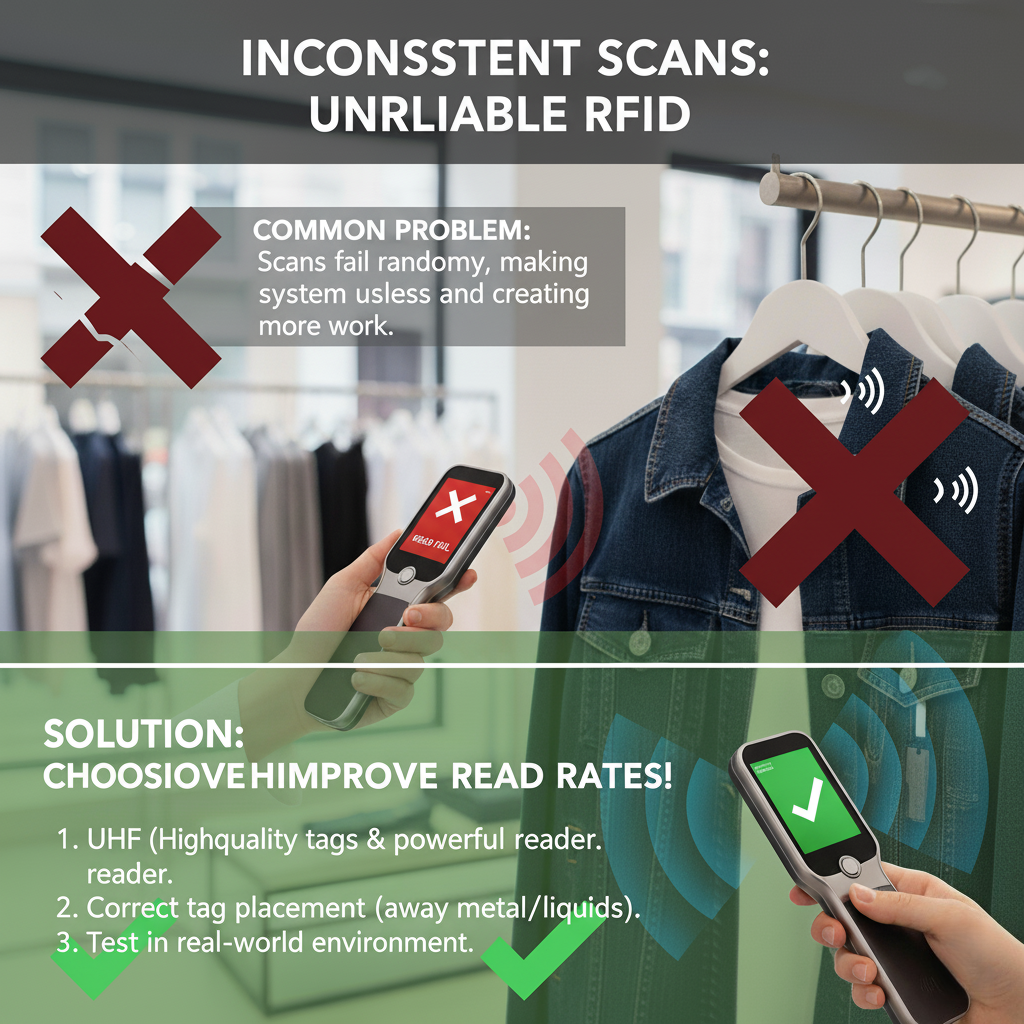
Getting a 99%+ read rate is the goal for any professional system. It is achievable, but you have to be deliberate. First, do not cheap out on components. A quality tag from a company like Fongwah has a better antenna and chip. It will perform better than a no-name tag. The same goes for the reader. A good reader allows you to adjust the power and fine-tune its performance. Second, tag placement7 is key. Always place the tag in a consistent spot, like the garment's sewn-in care label. Keep it away from metal buttons, zippers, or decorative metal threads8. Third, orientation matters. The tag's antenna needs to align with the reader's antenna for the best read. I once helped a client whose initial test on hanging garments had a 70% read rate. We realized the tags were horizontal but the reader's signal was vertical. We simply turned the tags 90 degrees, and the read rate jumped to 99.8%. This is why you must always test in your actual environment.
Key Optimization Strategies
| Strategy | Description | Impact |
|---|---|---|
| Use Quality Components | Use tags and readers from a trusted supplier. Better antennas and chips make a real-world difference in performance. | High |
| Strategic Tag Placement | Think about where the tag goes. Place it on a care label or hang tag, far from any metal or liquids on the item. | High |
| Reader Power and Tuning | Adjust the reader's output power. Too much power can create errors, while too little won't read far enough. | Medium |
| Antenna Orientation | The angle between the tag and reader antenna is critical. Test different positions to find what works best. | High |
| Test in the Real World | A clean lab is not a busy warehouse. Always test in the actual environment where the system will be used. | Critical |
Conclusion
Yes, RFID works very well through clothing. But your success depends on picking the right frequency and quality hardware, and setting it up correctly for your specific job.
---Explore this link to understand common RFID system challenges and how to overcome them. ↩
Learn about the impact of different RFID frequencies on system performance and efficiency. ↩
Discover which fabrics can interfere with RFID signals and how to mitigate these issues. ↩
Discover best practices for implementing RFID in inventory systems for maximum efficiency. ↩
Understand why UHF is preferred for RFID applications, especially in retail and logistics. ↩
Explore the advantages of investing in high-quality RFID tags for better performance. ↩
Learn how proper tag placement can significantly improve RFID read rates. ↩
Find out how metallic threads can interfere with RFID tags and solutions to this problem. ↩