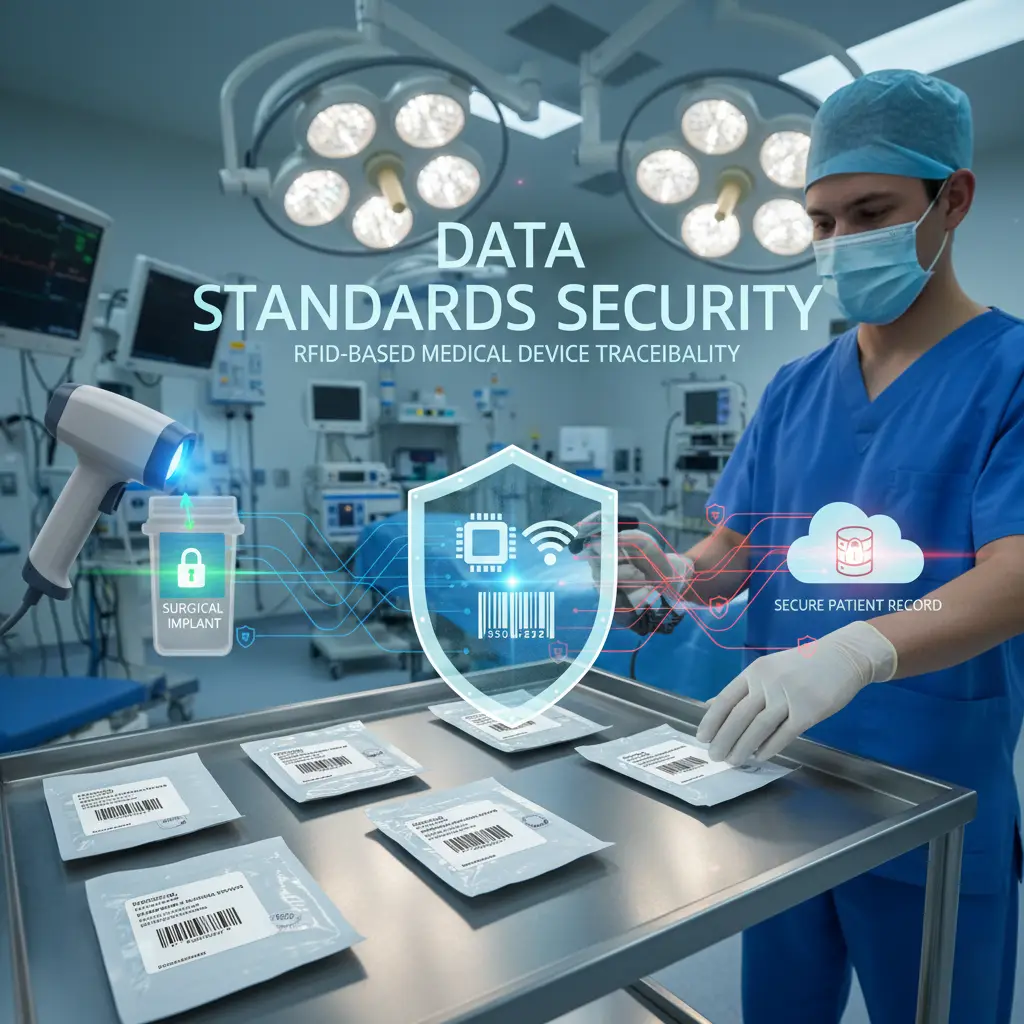
Medical data breach1es scare us all. Without strict standards, patient safety suffers. RFID technology offers a secure, standardized path forward.
Data standards like GS1 and ISO ensure medical device traceability. They define how data is stored and shared globally. Privacy protection relies on strong encryption and strict access controls. This combination secures patient information while tracking devices effectively.

I started my career on the factory floor at Fongwah. I handled individual chips. Now, I see the big picture of global data. Let’s look closer at the specific technology and standards involved.
What data standards2 define current medical RFID systems?
Proprietary data formats create chaos. Doctors cannot track tools efficiently. We need a universal language for safety.
GS1 EPC global standards and ISO/IEC 180003 series are the pillars of traceability. They ensure tags talk to readers globally. This standardization allows different hospitals and manufacturers to track the unique identity of the same device seamlessly.

The Critical Role of UDI
In my early days as a production line operator, I saw batches of tags fail. The chip was physically fine. The failure was in the data encoding. The reader did not understand the tag. This taught me a valuable lesson. Hardware is useless without a standard language. In the medical field, this language is the Unique Device Identification (UDI).
Governments like the US (via the FDA) and the EU enforce UDI regulations. RFID tags must store this specific identifier. It links the physical tool to a digital record. We cannot just write random numbers onto a tag. We must follow a structure. This structure tells the hospital system what the device is, when it was made, and when it expires.
ISO vs. GS1 Standards
There is often confusion between ISO standards and GS1 keys. We need to distinguish them clearly. ISO defines the air interface (how they talk). GS1 defines the data content (what they say).
Here is a breakdown of how these standards function in a medical setting:
| Standard Category | Specific Regulation | Primary Function |
|---|---|---|
| Air Interface | ISO/IEC 18000-63 | Defines UHF communication frequency and protocols. |
| Data Structure | GS1 EPC (SGTIN) | Defines the unique serial number format for the item. |
| Data Exchange | EPCIS | Defines how tracking events4 extend across the supply chain. |
At Fongwah, we configure our readers to handle both. But for medical traceability, the alignment of ISO 18000-63 with GS1 SGTIN is the gold standard. It ensures that a scanner in Canada reads the same data as a scanner in China.
How can we protect patient privacy during data transmission?
Wireless signals can be intercepted. Patient identity theft is a real danger. We must lock the data door tightly.
Encryption is the first line of defense in RFID. Modern chips use AES-128 encryption algorithms. Additionally, specific authentication protocols prevent unauthorized scanning. This secures the link between the tag and the reader.

Cryptography on the Chip
I once had a client ask me a tough question. He worried about "unauthorized scanning" in a hospital hallway. He thought a hacker could walk by and steal data from a pacemaker or a surgical kit. It is a valid fear. The solution lies in cryptography5.
Basic RFID tags just broadcast an ID number. This is dangerous for sensitive medical data. We must use high-security chips. These chips do not just "shout" their data. They require a password or a cryptographic key. The reader sends a challenge. The tag must answer correctly using a shared secret key. If the math does not match, the tag stays silent. This stops "skimming" attacks.
Privacy-Enhancing Technologies (PETs)
Beyond encryption6, we use other methods to hide data. One method is the use of Pseudonyms7. The tag changes its ID randomly during each session. Only the authorized backend database knows the pattern. To an outsider, it looks like noise.
Here are the main threats and our technical solutions:
| Security Threat | Technical Solution | Result |
|---|---|---|
| Eavesdropping | Forward Secrecy | Old keys cannot decrypt new messages. |
| Tracking/Stalking | ID Randomization | The tag ID changes constantly to prevent location tracking. |
| Cloning | Challenge-Response | A fake tag cannot generate the correct encrypted response. |
As an engineer, you know that adding security adds cost. But in healthcare, the cost of a data breach1 is much higher. We build these features into our specialized readers to ensure compliance.
Is there a conflict between system interoperability8 and data security?
Too much security blocks access. Doctors need data fast. We must find the right balance between open access and locked doors.
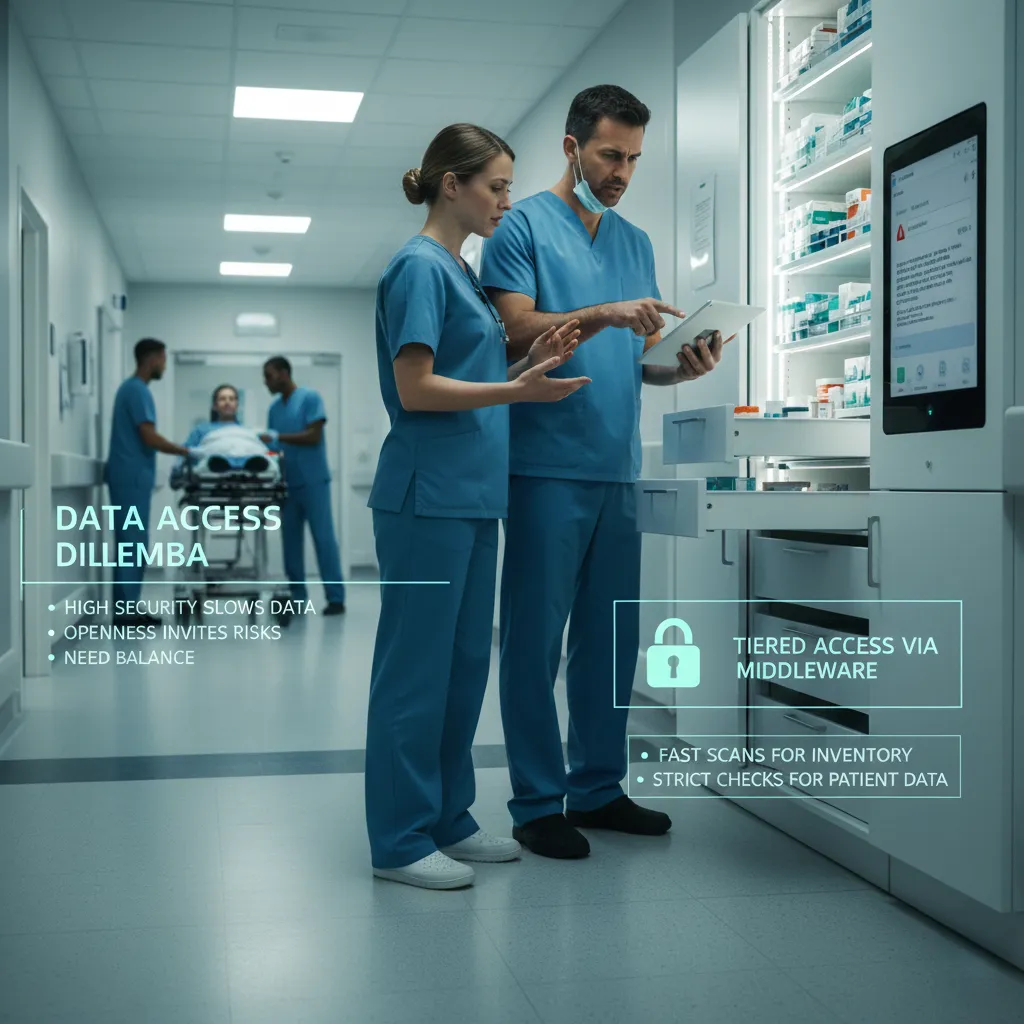
High security often slows down data reading speeds. Interoperability requires open standards, but openness invites risks. The solution lies in tiered access levels via middleware9. This ensures fast scans for inventory but strict checks for patient data.
The Speed vs. Safety Trade-off
William, you surely know this struggle from your design work. Engineering asks for unbreakable locks. Operations asks for lightning speed. When we encrypt data, the reader takes longer to process it. In an emergency room, seconds matter. A nurse cannot wait five seconds for a scan to verify a blood bag.
However, if we make the system too open to improve speed, we risk data leaks. Interoperability means "plug and play." It allows a reader from Brand A to read a tag from Brand B. Secure systems are often closed. They utilize proprietary keys. This breaks interoperability8.
Middleware as the Bridge
The industry solves this through intelligent middleware9. We do not store patient names on the RFID tag. That is a mistake. The tag should only store a random tracking number (the UDI). The sensitive data stays in the secure hospital server.
The middleware9 sits between the reader and the server. It filters the data. It checks if Reader A has permission to see the data for Tag B. This allows us to use standard, fast, interoperable hardware. The security logic moves to the software layer.
| System Layer | Function | Security/Speed Balance |
|---|---|---|
| Tag Layer | Stores ID (UDI) | Fast read, Low security storage. |
| Reader Layer | Captures Signal | Standard protocols (ISO), High interoperability8. |
| Middleware | Authenticates & Decrypts | Slower processing, High security logic. |
This architecture allows Fongwah readers to fit into complex hospital systems. We provide the hardware speed. The system integrator provides the security logic.
Conclusion
Standards and privacy are not optional. They are the foundation of trust in medical RFID. We must build secure, interoperable systems today.
---Understand the serious implications of data breaches in the medical field and the need for robust security. ↩
Learn about the essential data standards that ensure safety and traceability in medical devices. ↩
Learn about ISO/IEC 18000 standards to see how they define communication protocols for RFID systems. ↩
Learn how tracking events help in monitoring the supply chain of medical devices effectively. ↩
Discover the role of cryptography in securing RFID communications and protecting sensitive data. ↩
Understand the role of encryption in safeguarding sensitive patient information during data transmission. ↩
Explore how pseudonyms can protect patient identities by randomizing tag IDs. ↩
Learn about the significance of interoperability for seamless communication between different RFID systems. ↩
Discover how middleware bridges the gap between RFID readers and secure servers for data protection. ↩